
The Space of Gong Culture in Vietnam’s Central Highlands: A Living Cultural Treasure
Content []
The Space of Gong Culture in Vietnam’s Central Highlands: A Living Cultural Treasure
What Is the Central Highlands Gong Culture?
The Central Highlands gong culture refers to the distinctive Space of Gong Culture practiced by many communities in Vietnam’s Central Highlands. This tradition is closely connected with the daily life and spiritual beliefs of ethnic groups such as Ba Na, Gia Rai, EDe, and Mnong, making it an important part of ethnic minority culture in the region. In recognition of its cultural value, the Space of Gong Culture was inscribed by UNESCO as an UNESCO intangible cultural heritage Vietnam in 2005.
Many researchers believe the origins of gongs can be traced back to ancient stone instruments, often described as the predecessors of today’s gong sets. Archaeological images on the bronze drums of the Dong Son culture, which date back more than 4,000 years, also suggest that the Central Highlands may have been an early cradle of gong traditions in Southeast Asia. Over generations, local communities transformed natural materials into sophisticated musical instruments capable of producing complex sound systems, from single melodic lines to layered and resonant rhythms.
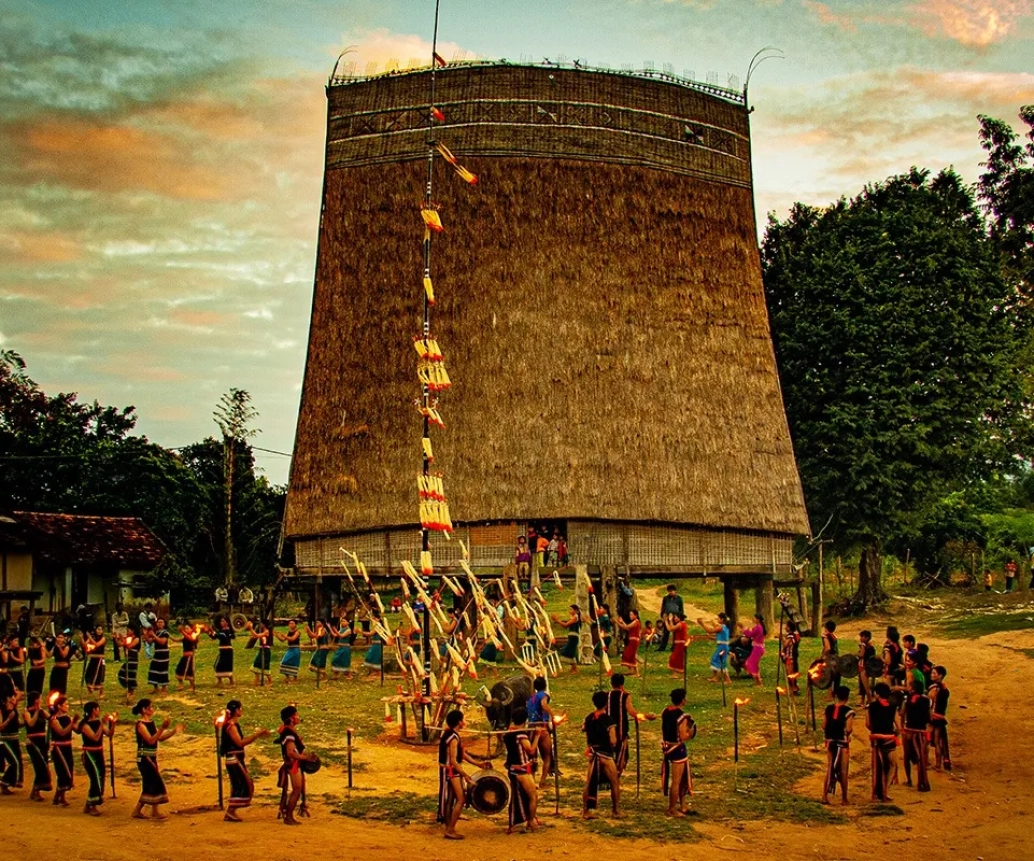
What makes the Central Highlands gong culture truly unique is the cultural space in which it is performed. The Space of Gong Culture includes traditional communal houses such as nha rong and nha dai, village festivals, and the surrounding natural landscape of forests and mountains. Within this environment, gong performances become communal events where villagers gather for rituals, celebrations, and seasonal ceremonies.
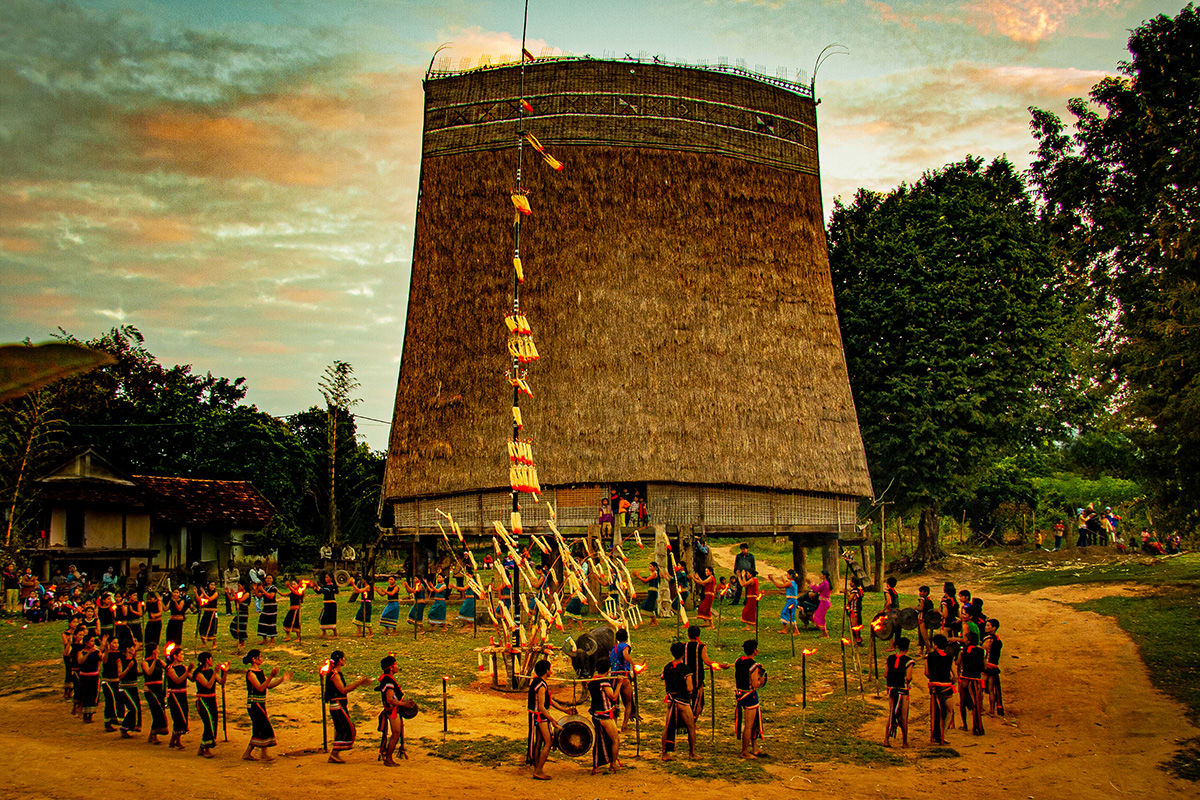
Although gong playing is traditionally associated with men, in some communities women also participate in performances, playing gongs or dancing the xoang. This shared participation highlights the communal spirit of the Space of Gong Culture, where music, ritual, and everyday life come together to preserve one of Vietnam’s most remarkable cultural traditions.
The Spiritual Meaning of Gong Culture in Ethnic Minority Life
For many communities in Vietnam’s Central Highlands, the sound of gongs is far more than music. Within the Central Highlands gong culture, each gong is believed to carry a spiritual presence. Following the worldview that all things possess a spirit, people believe that every gong holds a guardian deity, and its sound becomes a bridge between humans and the spiritual world. When the gongs resonate across the village, they are seen as a message sent to ancestors and divine forces.
This belief gives the Space of Gong Culture a deep sacred meaning in the daily lives of communities such as Ba Na, Gia Rai, EDe, and Mnong. Gong performances accompany many important ceremonies, forming an essential part of ethnic minority culture in the region. From celebrations of a newborn child to rituals honoring the deceased, the sound of gongs marks the key moments in a person’s life.
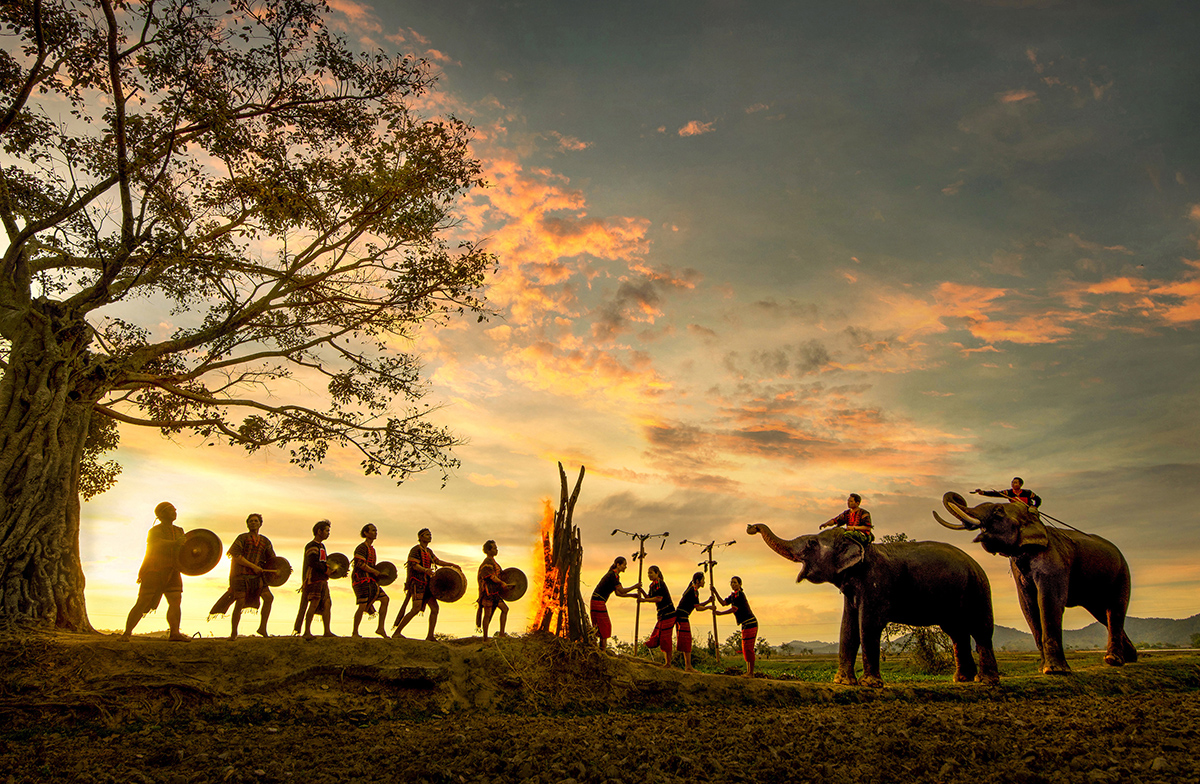
Gongs are also closely connected with agricultural cycles and traditional festivals. Ceremonies such as new rice celebrations, moon worship rituals, and funeral traditions are all accompanied by powerful gong rhythms. In these moments, the music does not simply entertain but serves as a spiritual language that communicates with the unseen world.
Beyond their ritual role, gongs symbolize unity within the community. When villagers gather to perform together, the layered sounds reflect cooperation between generations and ethnic groups across the Central Highlands. In this way, the Central Highlands gong culture becomes more than a musical tradition. It represents the spiritual soul of the mountains and forests, linking people, nature, and the sacred world in one shared cultural space.
The Cultural Value of Gong Culture in the Central Highlands
Beyond its spiritual meaning, the Central Highlands gong culture also represents a remarkable expression of ethnic minority culture in Vietnam. Within the Space of Gong Culture, each community has developed its own musical style, creating a rich diversity of sounds across the region.
Among the EDe, gong performances often feature complex rhythms, fast tempos, and powerful intensity. The Mnong tend to maintain a more balanced intensity even when the tempo becomes lively. Meanwhile, the Ba Na and Gia Rai favor melodic structures that blend deep, resonant tones with lighter, soaring notes, producing a sound both majestic and lyrical.
Another distinctive feature of this tradition is its communal ownership. In the Space of Gong Culture, gongs are not considered private possessions but shared treasures of the village. They carry cultural norms and collective identity, reflecting the traditions that communities have preserved for generations.
What makes this heritage even more fascinating is the remarkable musical sensitivity of the Central Highlands’ people. Although many communities did not originally cast the gongs themselves, they developed an extraordinary ability to tune and adjust them. With finely trained ears, villagers transform these metal instruments into sophisticated musical ensembles capable of producing layered and harmonious sounds.
Because each ethnic group arranges its gong sets differently and performs with unique rhythms, even local listeners can often recognize which community is playing simply by hearing the gong patterns. This diversity is one of the reasons why the Central Highlands gong culture, recognized as part of UNESCO intangible cultural heritage Vietnam, continues to be admired as a living cultural treasure.
Experiencing the Central Highlands Gong Culture
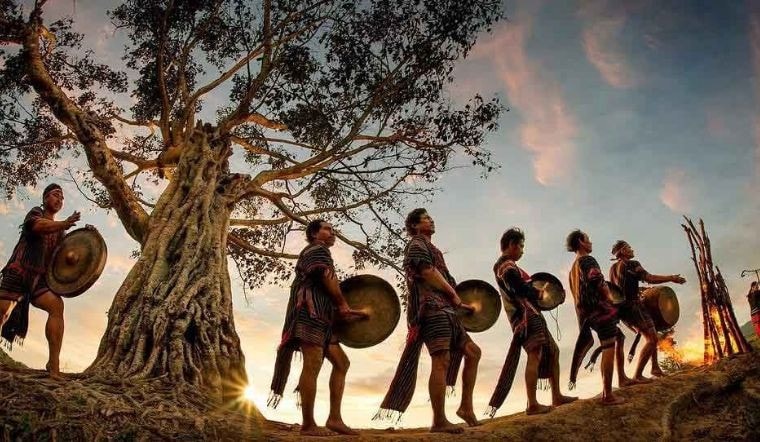
For travelers seeking a deeper connection with local traditions, experiencing the Central Highlands gong culture offers a memorable cultural journey. In many villages, visitors are welcomed to gather at the communal house, where the rhythmic sounds of gongs echo through the mountains. Sitting around a warm fire, sharing traditional rice wine, and watching local performances allows travelers to witness the living spirit of the Space of Gong Culture.
The experience engages more than just the ears. While listening to the powerful gong ensembles performed by communities such as Ba Na, Gia Rai, EDe, and Mnong, visitors are also surrounded by the dramatic landscapes of the Central Highlands. Combined with simple local cuisine and traditional dances, the moment becomes a multi-sensory encounter with the region’s ethnic minority culture, where music, nature, and community come together in a uniquely immersive way.
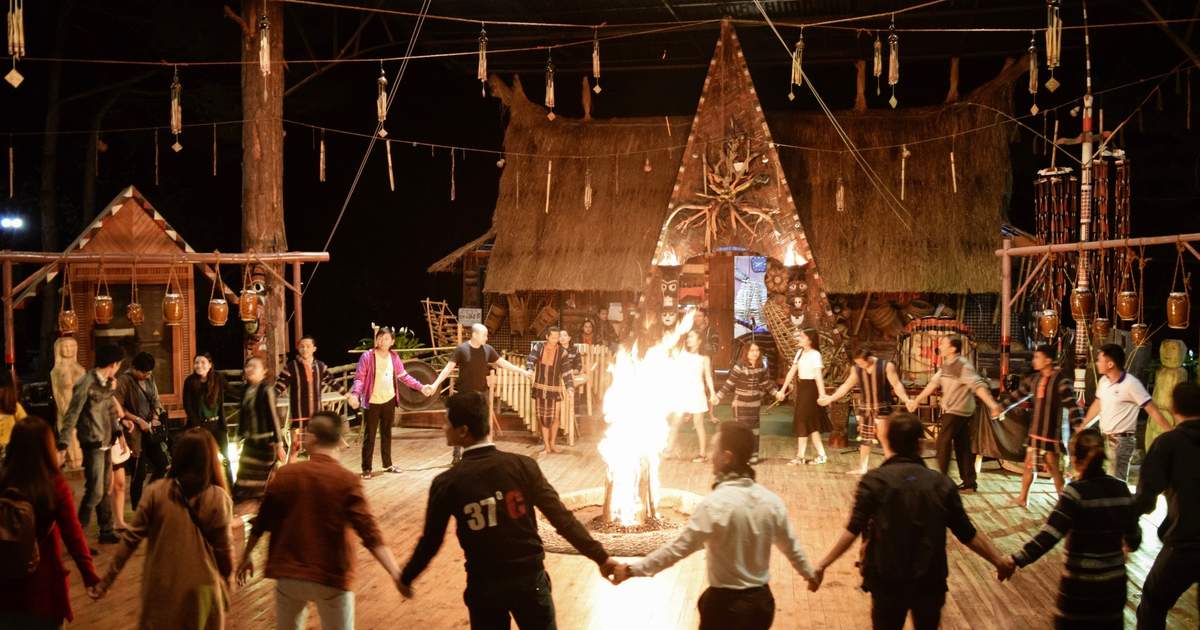
Experiencing the Central Highlands gong culture is more than watching a performance. It is an opportunity to step into the living traditions of the Space of Gong Culture, where the rhythms of gongs still echo through village ceremonies and community gatherings among groups such as Ba Na, Gia Rai, EDe, and Mnong.
If you would like to explore this remarkable UNESCO intangible cultural heritage of Vietnam during your trip, ACT Travel Agent can help you design a journey that brings you closer to the authentic ethnic minority culture of the Central Highlands. From cultural encounters to immersive village experiences, it is a chance to discover a side of Vietnam that few travelers truly experience.
Read this next


Bat Trang pottery village a timeless craft experience near Hanoi
Quick Contact
Reviews from Customers
Please take a look at the following reviews from our customers
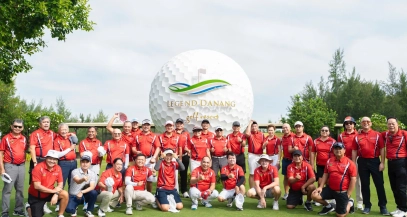
Mr Clarence- Travel President, Philippines
Vietnam | 01/14/2026
Luxury Golf Tour in Da Nang, 5days
Hi Jimy, We returned home safely today. I would like to say a special thanks to you and your team ACT TRAVEL. We really loved and satisfied with your pro services. We do love these golf courses in Da Nang. They were amazing and fantastic quality and view. We will come back here soon. I am looking foward to working together with you soon! Best regards, Mr Clarence- Travel President, Philippines
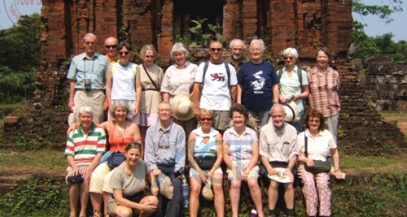
Mr. Jean Pie
United Kingdom | 10/13/2014
RAM Holidays from UK (Impressive of Vietnam 15 days)
Mr. Jean Pie – Tour Leader said “Thank you very much for doing such an excellent job on the tour. You went above and beyond for all of us and we really appreciate all your hard work. Thank you for your calm leadership through the “HAIYAN” storm, you really help us through it. Thanks to ACT Travel, we had a wonderful time and unforgettable memory”.
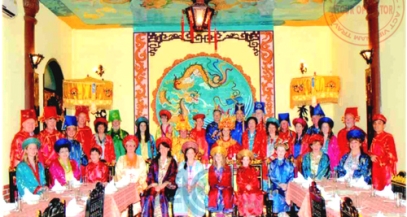
Mr. Navy Vang
Australia | 10/13/2014
Mandarin Group from Australia (Charming Vietnam 10 Days)
Mr. Navy Vang - Tour manager from Australia said: " Wow what a great vacation !. Thank you Mr Kelvin Pham so much. We are very grateful for everything you did for us and everything went very well. We’re safe and sound back home thinking about the joy we experienced. I've already decided that when I choose to travel again, I will go through your company. I also highly recommend ACT Travel Travel to any organization looking for a great agency. Kind regards
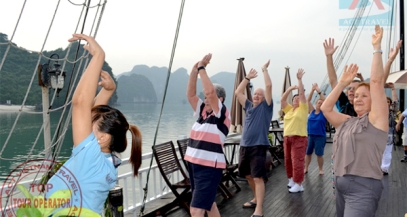
Mr. Ricardo - Program Manager
Brazil | 03/31/2014
DOMINGOS Group from Brazin (IMPRESSIVE VIETNAM 17 DAYS.)
Mr. Ricardo - Program Manager said “Dear Kelvin, Thanks you very much for your well arrangement. Thank you for the updated weather information. I have traveled a lot as a geography professor and dealt with many tour operators. You are one of the best tour operators who can take so much concern and care about customers. I must congratulate you on your good organization and care to minute points. Thanks for the mobile phone you provided to us and SIM cards you provide to all of us (29 cards, I know they are not cheap), it was an excellent convenience for us. It was a brilliant idea and we really appreciated knowing there was someone we could contact at any time should we need to. We love your welcome dinner at Binh Quoi village, where we enjoyed rich traditional southern Vietnamese cuisine with musical accompaniment provided by local folk musicians. We were very interested in the traditional Vietnamese wedding in Binh Quoi and we never forget the “Gong show” in Buon Me Thuot. Once again, thank you very much for great job”.
Ms. Barbara Betts
Australia | 10/13/2014
Orbiz Group from Australia (Discover Vietnam and Cambodia 15 Days)
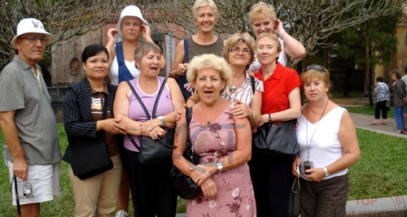
Ms. Barbara Betts - Escorted guide from Australia said: " Dear Kelvin I want to take this opportunity to thanks you for providing us with superb guides in Vietnam and Cambodia. Well, Manh - tour guide in Vietnam is very professional and knowledegable and you can feel very safe in allowing him to guide your tours. The drivers you provided were also friendly, capable and they too did everything for the group to be happy Thanks you Kelvin so far for a fabulous tour.
Mr. Dany
Malaysia | 10/13/2014
Teachers Group From Malaysia ( Hanoi – Halong bay – Ninh Binh 6 Days )
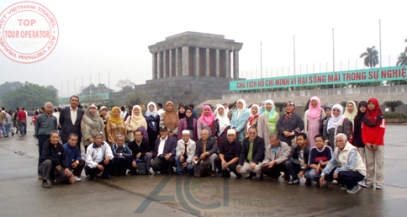
Mr. Dany - Escorted guide from Malaysia said: " Hi Kelvin Pham, Thanks for arranging a great trip. I wanted to let you know how pleased we were with the itinerary and all the arrangements you organized. Everything worked extremely well and went exactly as planned. The guides were very knowledgable. My favorite site was cruising on the Halong bay. The hotels were great as they were located at the heart of city. We did enjoy eating at the local restaurants as arranged by ACT. The foods were sometimes unusual, but still tasty. I loved “Pho Hanoi“ very much and I would try to cook at my home… Thanks again
Mr. Ohad
Turkey | 10/13/2014
Istmaz Group from Turkey (Saigon - Mekong Delta - Cambodia - Angkor Wat 12 Days).
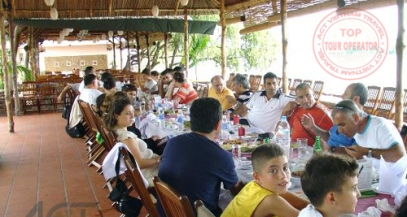
Mr. Ohad - The Tour Leader said: " On behalf of the entire group, I just wanted to thank both of you for all your help and outstanding execution in making our trip memorable! The entire group could not say enough great things about how well organized & smooth everything went. I really enjoyed Vietnam & Travel. Both tour guides were terrific and Angkor Wat was just amazing! All your arrangements worked out very smoothly and I consider the pilgrimage to be a great success ".
Mr. Steven
United Kingdom | 10/13/2014
Ponila Group from UK (Higlight of Vietnam 16 Days).
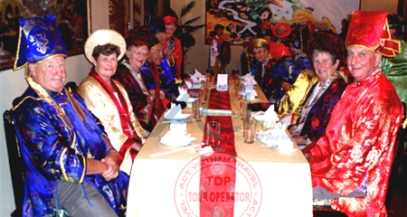
Mr. Steven - Escorted guide from UK said: Our trip to Vietnam was overall a positive one. We were very happy with the level of accommodation and quality of the food at all times. We love Hanoi but Ha Long Bay is certainly one of the most beautiful places we have ever seen; the old city in Hoi An has great potential becoming a world-class tourist attraction; and citadel in Hue embodies a great deal of historic signifance, we have a lot of photos in Hue. Cruising on Mekong Delta river was so interesting and Dalat highland was very romantic. Finally, please give our thanks to the tour guides Mrs Phuong, Mr Ky and the drivers who accompanied us throughout, always accommodating to the group's requests and last minute changes in itinerary. We won't forget you!
Mr. Barrick
United States | 10/13/2014
Global Alliane Group From USA (Discover Vietnam – Cambodia 10 Days)
Mr. Barrick - the Tour Leader said: " Dear ACT Team,This is to thank you, and all of those who organised and guided our visit to Vietnam & Cambodia, for a superb holiday. We had a trip of a life time. Everything we were promised happened and more. We brought back so many memories and stories. The restaurants were wonderful and the hotels were great. Mr Nguyen had such a lot of knowledge he shared with us, and had a great sense of humor. He even knew of some Cambodian slang words. The whole trip will be something we will always remember and share with our family and friends. Thanks for all your help in making it so enjoyable. We shall tell all our friends traveling to Indochina that they must use ACT Travel's services !! ".
Partner





ACT VIETNAM TRAVEL
No 3, Alley 25, Dich Vong Hau Str, Cau Giay Dist, Hanoi Capital, Vietnam
sales@vietnamtraveland.com - jimy@vietnamtraveland.com - vip@vietnamtraveland.com
License: 01-639/2015/CDLQGVN-GPLHQT
Company
Term of use
Payment Methods


