
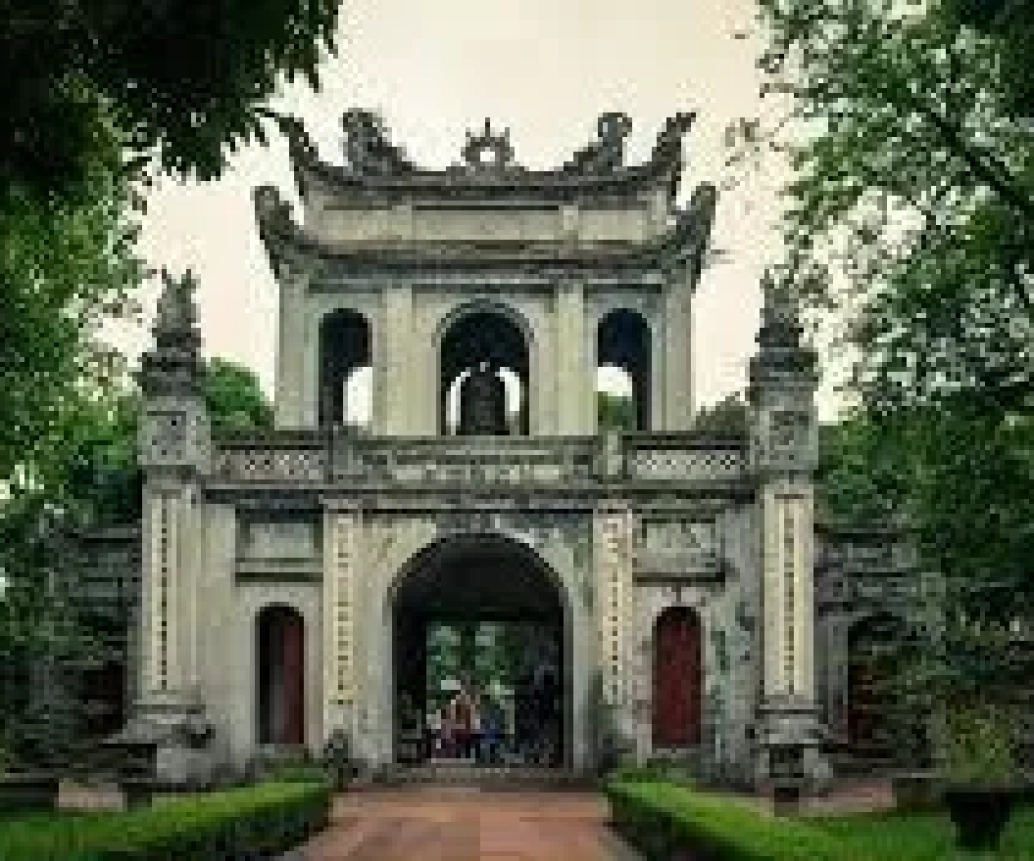
Temple of Literature Hanoi: A Journey Into Vietnam’s Scholarly Heritage
Content []
Temple of Literature Hanoi: The Heart of Vietnam’s Confucian Legacy
Where Is the Temple of Literature and Why Do Travelers Visit It?
Located in the heart of Hanoi, the Temple of Literature sits just a short distance from the historic Thang Long Imperial Citadel, the former imperial center of Vietnam. Surrounded by leafy courtyards, ancient gates, and quiet ponds, the temple feels like a calm historical sanctuary hidden within the modern city.
Originally built in 1070 and later developed into Vietnam’s first national university, the complex once trained scholars who studied Confucian philosophy and prepared for royal examinations. Walking through its five courtyards today, travelers can still sense the academic spirit that shaped Vietnamese education for centuries.
But history is only part of the reason why visitors come here. For many international travelers, the temple offers a chance to experience a different side of Hanoi beyond busy markets and street food stalls. The elegant architecture, moss-covered roofs, and rows of stone stelae resting on turtle statues create a setting that feels both sacred and poetic. It is one of the most photogenic cultural landmarks in the city and a favorite stop for those interested in Vietnam’s intellectual heritage.
Another fascinating element is the living tradition that continues at the site. Vietnamese students often visit the temple before important exams to pray for good results, bringing flowers or incense as a sign of respect for knowledge and learning. Seeing young students dressed in graduation gowns taking photos among centuries-old courtyards adds a meaningful layer to the experience.
The temple is open daily, though it can become quite busy during peak travel seasons such as spring and autumn, as well as on weekends. Travelers who prefer a quieter visit often arrive early in the morning or later in the afternoon on weekdays, when the peaceful atmosphere makes it easier to appreciate the timeless beauty of this historic place.
A Walk Through Vietnam’s First University
Stepping into the courtyards of the Temple of Literature feels like walking through the earliest chapters of Vietnamese education. Built in 1070 during the reign of Ly Thanh Tong, the complex was originally dedicated to Confucius and revered scholars. A few years later, in 1076, his successor Ly Nhan Tong established the Imperial Academy here, creating what is widely recognized as the first university in Vietnam.
At the beginning, the academy mainly educated princes and the sons of high-ranking officials. Over time, however, the doors of learning gradually opened wider. During the Tran Dynasty, talented students from different social backgrounds were allowed to study here, marking an important shift toward a merit-based education system that valued knowledge and ability above noble birth.
One of the most remarkable legacies inside the complex is the collection of 82 stone stelae mounted on carved turtle statues. Commissioned in 1484 under Le Thanh Tong, these stelae record the names of doctoral laureates who passed royal examinations between 1442 and 1779. Today, they are recognized by UNESCO as part of the Memory of the World documentary heritage, preserving centuries of academic achievement.
Like many historical sites in Vietnam, the temple also endured difficult periods. When the imperial capital moved to Hue in 1802 under the Nguyen Dynasty, the academy gradually lost its role as the nation’s central university. Later conflicts, including heavy damage during fighting in 1947, left parts of the complex in ruins. Yet the foundations, courtyards, and treasured stone stelae survived.
In recent decades, careful restoration efforts by the Vietnamese government have revived the site and preserved its historical character. Today, the temple stands not only as a symbol of Vietnam’s deep respect for learning, but also as one of Hanoi’s most meaningful cultural landmarks, where visitors can trace the country’s long tradition of scholarship while wandering through peaceful gardens and ancient gates.
What to See and Experience Inside the Temple of Literature
The Five Courtyards and Ancient Architecture
One of the most fascinating ways to explore the Temple of Literature is by walking through its five courtyards, each unfolding like a chapter in Vietnam’s long story of learning and scholarship. As visitors move deeper into the complex, the atmosphere gradually shifts from the busy rhythm of Hanoi outside to a quieter world shaped by ancient architecture, symbolism, and centuries of academic tradition.
1. The First Courtyard – Dai Trung Gate
The journey begins at the grand entrance known as Dai Trung Mon, the gateway that symbolically separates everyday life from the realm of knowledge and wisdom. On both sides stand two smaller gates: Dai Tai Mon, representing those who strive tirelessly for learning, and Thanh Duc Mon, honoring individuals who achieve both intellectual brilliance and moral virtue. Passing through this gate feels almost ceremonial, as if stepping into a place where education has long been revered.
2. The Second Courtyard – Khue Van Pavilion
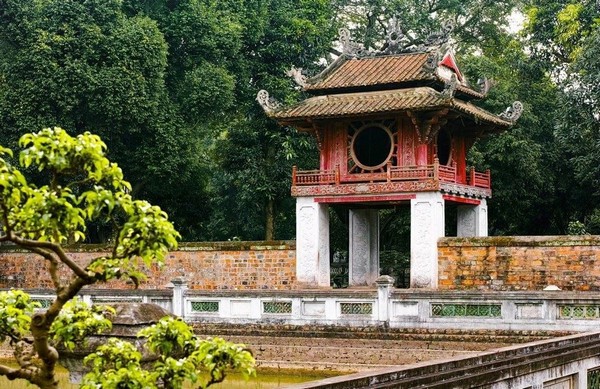
Further inside stands the elegant Khue Van Pavilion, one of the most recognizable symbols of Hanoi. This delicate two-story wooden pavilion, with its circular windows and balanced design, represents the harmony between heaven, earth, and human knowledge. Its cultural significance is so strong that the structure appears on Vietnam’s 100,000 VND banknote, making it an icon closely tied to the intellectual heritage of the capital.
3. The Third Courtyard – Thien Quang Well and the Doctoral Stelae
At the center of the third courtyard lies Thien Quang Well, a square pool whose name translates to “Well of Heavenly Clarity.” The still water reflects the surrounding architecture, symbolizing the calm and clarity that accompany true wisdom. Around the courtyard stand the famous 82 stone stelae resting on carved turtle statues. These monuments record the names of scholars who passed the royal examinations between 1442 and 1779 and are recognized by UNESCO as part of the Memory of the World documentary heritage.
4. The Fourth Courtyard – Dai Thanh Sanctuary
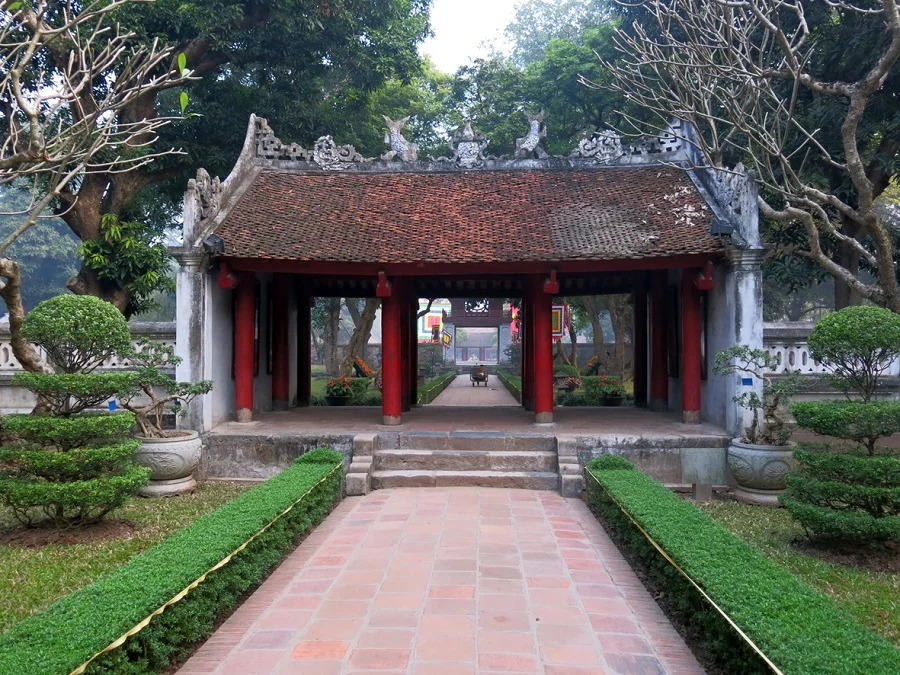
Moving deeper into the complex leads to Dai Thanh Mon, which opens into the main spiritual area of the temple. Behind it stands the solemn Dai Thanh Sanctuary, dedicated to Confucius and his most respected disciples. The space carries a quiet sense of reverence, reflecting the philosophical foundations that shaped traditional Vietnamese education for centuries.
5. The Fifth Courtyard – Thai Hoc House
The final courtyard is home to Thai Hoc House, the reconstructed site of the ancient Imperial Academy, considered Vietnam’s first university. Here, students once studied philosophy, governance, and literature in preparation for the imperial examinations. Today, the area features a large ceremonial drum and bronze bell, and it often hosts cultural activities such as calligraphy writing during Lunar New Year celebrations, continuing the tradition of honoring learning and intellectual achievement.
The Famous Stone Turtles and Doctor Steles
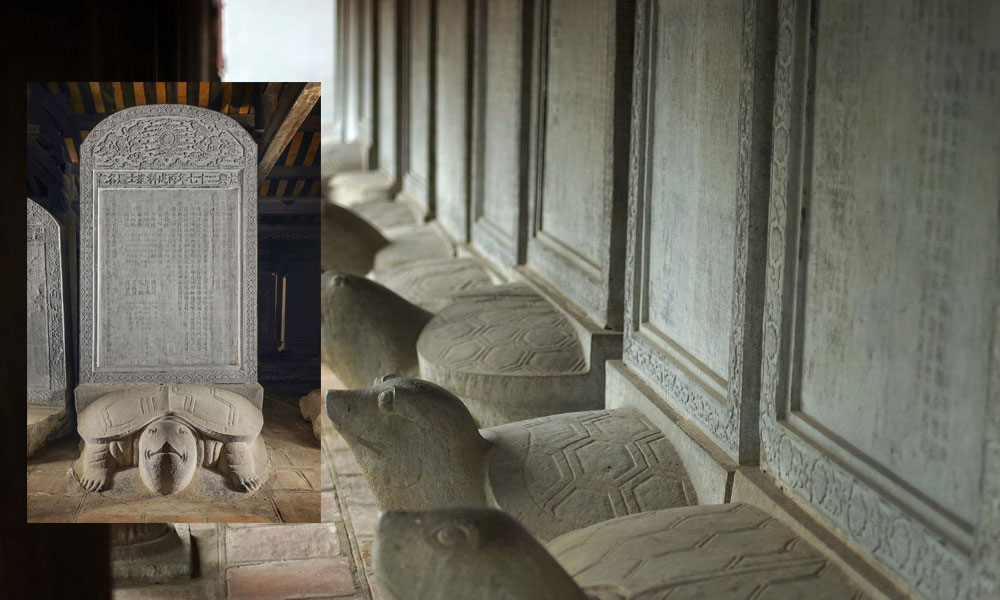
Within the courtyards of the Temple of Literature, one of the most remarkable sights for visitors is the row of ancient stone turtles carrying the famous Doctoral Stelae. Quietly lined beside the square pond of Thiên Quang Well, these monuments immediately capture attention, not only because of their unique appearance but also because they represent centuries of respect for education and scholarship in Vietnam.
Today, 82 stone stelae remain at the site, honoring scholars who passed the royal examinations during the Lê and Mạc dynasties between 1442 and 1779. Each stele records the title of the examination, an inscription praising learning and virtue, and the names and hometowns of successful doctoral graduates. Together, they form an extraordinary historical archive of Vietnam’s education system. Because of their outstanding value, the Doctoral Stelae at the Temple of Literature were recognized by UNESCO in 2010 as part of the Memory of the World documentary heritage.
The design of these monuments is equally symbolic. Every stele stands on the back of a stone turtle, a traditional symbol of longevity, wisdom, and perseverance in Vietnamese culture. The slabs are carved from blue stone and decorated with delicate motifs such as dragons facing the moon or ornamental patterns reflecting the artistic styles of different historical periods. The inscriptions themselves were composed by prominent scholars of the time and written in classical Chinese, giving them both literary and cultural significance.
Beyond their architectural beauty, the Doctoral Stelae express a long-standing Vietnamese philosophy: talent is the vital strength of the nation. For centuries, these monuments have celebrated intellectual achievement while encouraging future generations to pursue knowledge. Even today, many Vietnamese students visit the Temple of Literature before important exams, hoping that a walk through this historic courtyard might bring them inspiration and a little academic luck.
The Temple of Literature Night Tour: A Magical Cultural Experience
"The Quintessence of Education" at the Temple of Literature, held on Wednesdays, Saturdays, and Sundays, this Temple of Literature night tour offers a refined cultural experience that blends history, philosophy, and modern technology. Through advanced 3D mapping and visual storytelling, the tour brings Confucianism, Vietnam’s scholarly traditions, and revered sages to life in a way that is both accessible and visually striking for international visitors.
This carefully designed nocturnal journey unfolds across 15 immersive stops, transforming Vietnam’s first national university into an interactive masterpiece of light, symbolism, and history. The experience begins in the tranquil Nhap Dao Area before moving toward the Khue Van Pavilion, where symbolic imagery such as the carp leaping over the dragon’s gate is animated through light, representing perseverance, transformation, and academic success.
The grand finale takes place at the Thai Hoc Courtyard, where a 15-minute 3D mapping projection vividly narrates the theme “The Quintessence of Education.” This powerful visual sequence celebrates the core values of Vietnamese academia and the legendary stories of scholars whose dedication shaped the nation’s intellectual heritage.
Beyond visual spectacle, the tour invites meaningful interaction. Visitors engage their senses by lighting oil lamps, tasting lotus tea and peanut candy, and trying virtual calligraphy, allowing them to momentarily step into the world of an ancient Confucian student. Accompanied by traditional music, modern technology, and the calm of the night, the experience creates a deep emotional connection to the scholars of the past, leaving visitors with a lasting appreciation of Vietnam’s educational legacy.
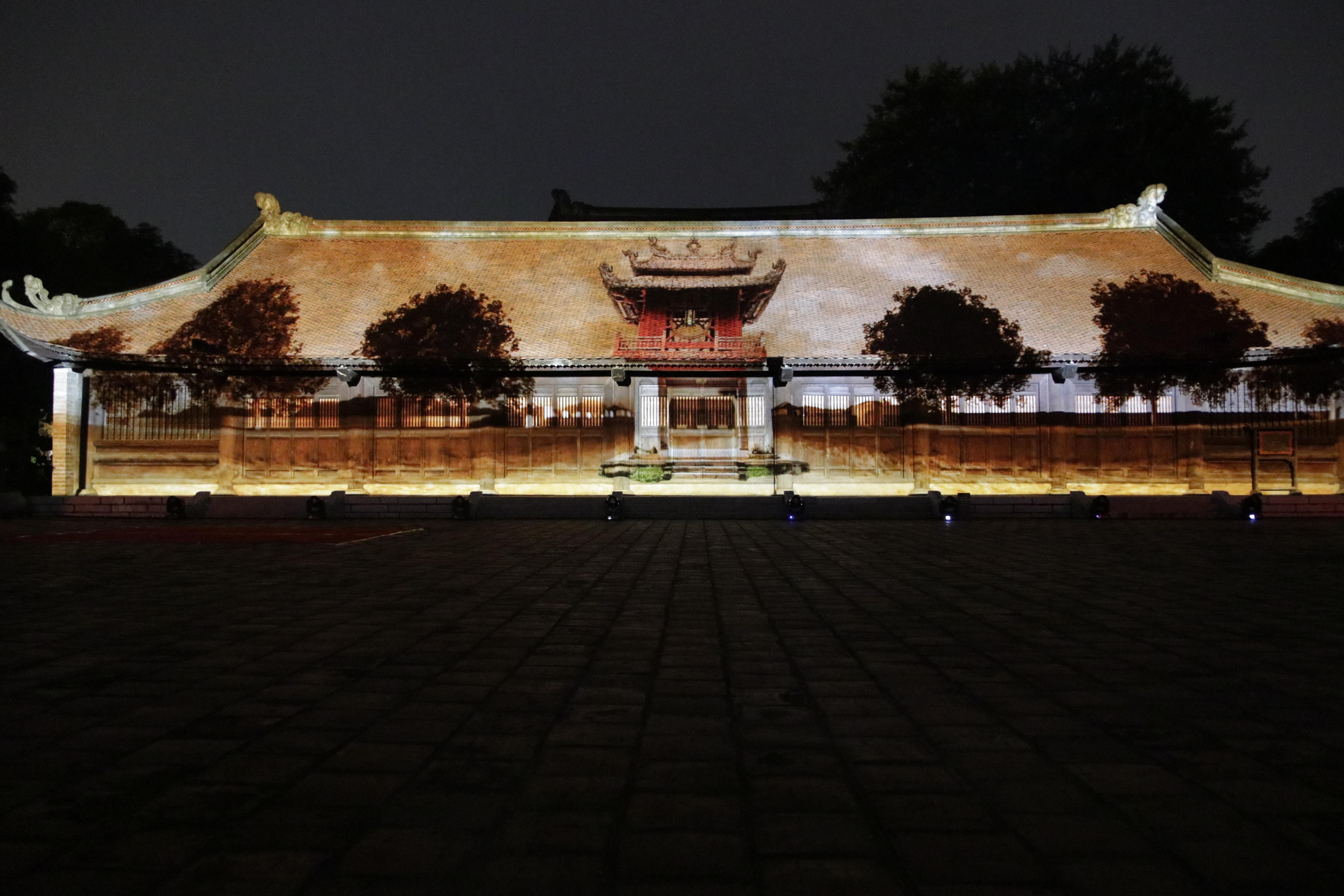
A visit to the Temple of Literature offers travelers a peaceful moment to step back into the intellectual heart of Vietnamese culture. Walking through its ancient courtyards, stone steles, and historic halls reveals a side of Hanoi where history, education, and tradition have shaped the city for nearly a thousand years.
If you plan to explore cultural landmarks like the Temple of Literature during your Vietnam travel experience, ACT Travel Agent can help you discover Hanoi through meaningful and well-crafted journeys.
Read this next


Travel Green for Earthday 2025

Quick Contact
Reviews from Customers
Please take a look at the following reviews from our customers

Mr Clarence- Travel President, Philippines
Vietnam | 01/14/2026
Luxury Golf Tour in Da Nang, 5days
Hi Jimy, We returned home safely today. I would like to say a special thanks to you and your team ACT TRAVEL. We really loved and satisfied with your pro services. We do love these golf courses in Da Nang. They were amazing and fantastic quality and view. We will come back here soon. I am looking foward to working together with you soon! Best regards, Mr Clarence- Travel President, Philippines
Mr. Jean Pie
United Kingdom | 10/13/2014
RAM Holidays from UK (Impressive of Vietnam 15 days)
Mr. Jean Pie – Tour Leader said “Thank you very much for doing such an excellent job on the tour. You went above and beyond for all of us and we really appreciate all your hard work. Thank you for your calm leadership through the “HAIYAN” storm, you really help us through it. Thanks to ACT Travel, we had a wonderful time and unforgettable memory”.
Mr. Navy Vang
Australia | 10/13/2014
Mandarin Group from Australia (Charming Vietnam 10 Days)
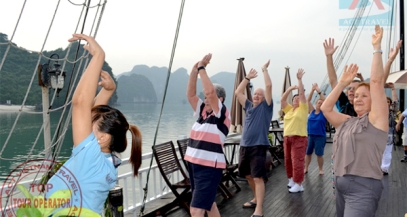
Mr. Navy Vang - Tour manager from Australia said: " Wow what a great vacation !. Thank you Mr Kelvin Pham so much. We are very grateful for everything you did for us and everything went very well. We’re safe and sound back home thinking about the joy we experienced. I've already decided that when I choose to travel again, I will go through your company. I also highly recommend ACT Travel Travel to any organization looking for a great agency. Kind regards
Mr. Ricardo - Program Manager
Brazil | 03/31/2014
DOMINGOS Group from Brazin (IMPRESSIVE VIETNAM 17 DAYS.)
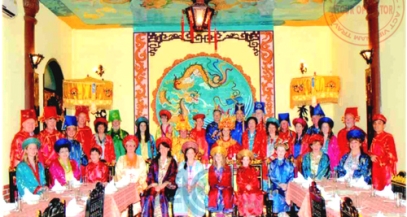
Mr. Ricardo - Program Manager said “Dear Kelvin, Thanks you very much for your well arrangement. Thank you for the updated weather information. I have traveled a lot as a geography professor and dealt with many tour operators. You are one of the best tour operators who can take so much concern and care about customers. I must congratulate you on your good organization and care to minute points. Thanks for the mobile phone you provided to us and SIM cards you provide to all of us (29 cards, I know they are not cheap), it was an excellent convenience for us. It was a brilliant idea and we really appreciated knowing there was someone we could contact at any time should we need to. We love your welcome dinner at Binh Quoi village, where we enjoyed rich traditional southern Vietnamese cuisine with musical accompaniment provided by local folk musicians. We were very interested in the traditional Vietnamese wedding in Binh Quoi and we never forget the “Gong show” in Buon Me Thuot. Once again, thank you very much for great job”.
Ms. Barbara Betts
Australia | 10/13/2014
Orbiz Group from Australia (Discover Vietnam and Cambodia 15 Days)
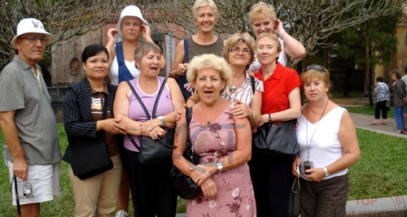
Ms. Barbara Betts - Escorted guide from Australia said: " Dear Kelvin I want to take this opportunity to thanks you for providing us with superb guides in Vietnam and Cambodia. Well, Manh - tour guide in Vietnam is very professional and knowledegable and you can feel very safe in allowing him to guide your tours. The drivers you provided were also friendly, capable and they too did everything for the group to be happy Thanks you Kelvin so far for a fabulous tour.
Mr. Dany
Malaysia | 10/13/2014
Teachers Group From Malaysia ( Hanoi – Halong bay – Ninh Binh 6 Days )
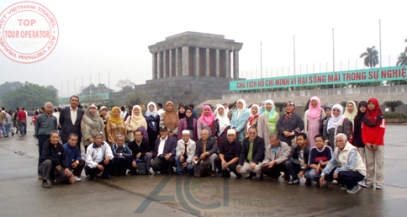
Mr. Dany - Escorted guide from Malaysia said: " Hi Kelvin Pham, Thanks for arranging a great trip. I wanted to let you know how pleased we were with the itinerary and all the arrangements you organized. Everything worked extremely well and went exactly as planned. The guides were very knowledgable. My favorite site was cruising on the Halong bay. The hotels were great as they were located at the heart of city. We did enjoy eating at the local restaurants as arranged by ACT. The foods were sometimes unusual, but still tasty. I loved “Pho Hanoi“ very much and I would try to cook at my home… Thanks again
Mr. Ohad
Turkey | 10/13/2014
Istmaz Group from Turkey (Saigon - Mekong Delta - Cambodia - Angkor Wat 12 Days).
Mr. Ohad - The Tour Leader said: " On behalf of the entire group, I just wanted to thank both of you for all your help and outstanding execution in making our trip memorable! The entire group could not say enough great things about how well organized & smooth everything went. I really enjoyed Vietnam & Travel. Both tour guides were terrific and Angkor Wat was just amazing! All your arrangements worked out very smoothly and I consider the pilgrimage to be a great success ".
Mr. Steven
United Kingdom | 10/13/2014
Ponila Group from UK (Higlight of Vietnam 16 Days).
Mr. Steven - Escorted guide from UK said: Our trip to Vietnam was overall a positive one. We were very happy with the level of accommodation and quality of the food at all times. We love Hanoi but Ha Long Bay is certainly one of the most beautiful places we have ever seen; the old city in Hoi An has great potential becoming a world-class tourist attraction; and citadel in Hue embodies a great deal of historic signifance, we have a lot of photos in Hue. Cruising on Mekong Delta river was so interesting and Dalat highland was very romantic. Finally, please give our thanks to the tour guides Mrs Phuong, Mr Ky and the drivers who accompanied us throughout, always accommodating to the group's requests and last minute changes in itinerary. We won't forget you!
Mr. Barrick
United States | 10/13/2014
Global Alliane Group From USA (Discover Vietnam – Cambodia 10 Days)
Mr. Barrick - the Tour Leader said: " Dear ACT Team,This is to thank you, and all of those who organised and guided our visit to Vietnam & Cambodia, for a superb holiday. We had a trip of a life time. Everything we were promised happened and more. We brought back so many memories and stories. The restaurants were wonderful and the hotels were great. Mr Nguyen had such a lot of knowledge he shared with us, and had a great sense of humor. He even knew of some Cambodian slang words. The whole trip will be something we will always remember and share with our family and friends. Thanks for all your help in making it so enjoyable. We shall tell all our friends traveling to Indochina that they must use ACT Travel's services !! ".
Partner





ACT VIETNAM TRAVEL
No 3, Alley 25, Dich Vong Hau Str, Cau Giay Dist, Hanoi Capital, Vietnam
sales@vietnamtraveland.com - jimy@vietnamtraveland.com - vip@vietnamtraveland.com
License: 01-639/2015/CDLQGVN-GPLHQT
Company
Term of use
Payment Methods


