

Bargaining in Vietnam: A Guide to Shopping Like a Local
Content []
Bargaining in Vietnam: A Guide to Shopping Like a Local
Is Bargaining Common in Vietnam?
Yes, bargaining in Vietnam is common, especially at traditional markets, night markets, street stalls, and places that attract large numbers of tourists. However, bargaining is not simply about getting the lowest possible price. In Vietnam bargaining culture, it is often a friendly negotiation between the seller and buyer, with both sides working toward a price they are comfortable with.
You are most likely to bargain at traditional markets and popular Vietnam markets such as Ben Thanh Market in Ho Chi Minh City, Dong Xuan Market in Hanoi, and night markets in Hoi An or Da Nang. Prices may also be negotiable when buying from beach vendors or using traditional xe om and taxis without fixed or metered fares. In these situations, asking for the price first and negotiating before agreeing to buy or use the service can help you avoid misunderstandings.
However, not everything is negotiable when shopping in Vietnam. Restaurants with listed menu prices, supermarkets, convenience stores, retail chains, shopping malls, and other businesses with clearly displayed fixed prices generally do not expect customers to bargain. A simple rule is to look at how prices are presented: if there is an official price tag or printed menu, pay the listed amount; if prices are quoted verbally at a traditional market or street stall, there may be room for a friendly negotiation.

How to Bargain in Vietnam: Simple Tips That Actually Work
Knowing how to bargain in Vietnam is less about being a tough negotiator and more about understanding the situation, staying friendly, and knowing roughly what you are willing to pay. If you are heading to a traditional market or shopping area where prices are negotiable, these simple Vietnam shopping tips can make the experience much easier.
- Check the price before you buy: Walk around and compare prices at several stalls before making a decision. You can also observe what locals are paying or do a quick online search to get a general idea of Vietnam market prices.
- Keep the conversation friendly: Bargaining should feel like a conversation, not a confrontation. Smile, stay polite, and try a few simple Vietnamese phrases such as “Xin chào” (Hello), “Bao nhiêu tiền?” (How much?), “Giảm giá được không?” (Can you lower the price?), and “Cảm ơn” (Thank you).
- Start lower than your target price: If the initial price seems high, you can begin with a lower counteroffer and gradually work toward a middle ground. Some tourists use around 50% of the first asking price as a starting point in highly tourist-oriented markets, but this is not a universal rule. Compare prices first and use your judgment rather than automatically cutting every price in half.
- Avoid comparing sellers directly: Saying that another stall sells the same item for less can make the conversation unnecessarily uncomfortable. Simply state the price you are willing to pay and negotiate from there.
- Buy several items together: If you want multiple products from the same seller, ask whether they can offer a better total price. Sellers may be more willing to give a discount when you buy several items at once.
- Know when to walk away: If you cannot agree on a price, smile, say “Không, cảm ơn” (No, thank you), and move on. Sometimes the seller may call you back with another offer, but if they do not, simply continue shopping elsewhere.
- Carry smaller cash denominations: Having smaller Vietnamese dong notes makes paying the agreed price easier and avoids situations where the seller cannot provide change. It can also make negotiations more straightforward than pulling out a large banknote immediately after bargaining hard over a small amount.
- Only bargain if you are genuinely interested: Avoid negotiating extensively just for fun if you have no intention of buying. Once the seller agrees to the price you offered, it is polite to follow through with the purchase.
Ultimately, successful bargaining in Vietnam is about finding a price that feels reasonable to both you and the seller. Keep it light, know when to stop, and remember that saving the last 10,000 VND is rarely worth turning an enjoyable market experience into an argument.
Enjoy Shopping in Vietnam Like a Local
Bargaining in Vietnam may feel unfamiliar at first, but once you understand when to negotiate and approach it with a smile, it can become a fun part of exploring local markets. The goal is not always to secure the lowest possible price, but to find a fair deal while enjoying the interaction, discovering local products, and experiencing another side of Vietnamese culture.
And if you want to discover more than what is written on the price tag, ACT Travel can help you experience Vietnam through its local markets, food, culture, and everyday life. Let us take care of the journey while you enjoy discovering Vietnam, one local experience at a time.
Read this next


Bat Trang pottery village a timeless craft experience near Hanoi


Quick Contact
Reviews from Customers
Please take a look at the following reviews from our customers
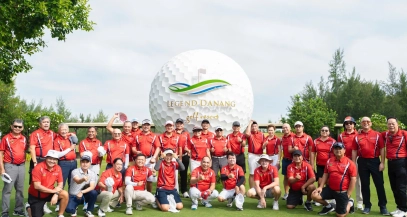
Mr Clarence- Travel President, Philippines
Vietnam | 01/14/2026
Luxury Golf Tour in Da Nang, 5days
Hi Jimy, We returned home safely today. I would like to say a special thanks to you and your team ACT TRAVEL. We really loved and satisfied with your pro services. We do love these golf courses in Da Nang. They were amazing and fantastic quality and view. We will come back here soon. I am looking foward to working together with you soon! Best regards, Mr Clarence- Travel President, Philippines
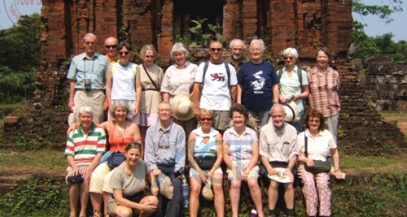
Mr. Jean Pie
United Kingdom | 10/13/2014
RAM Holidays from UK (Impressive of Vietnam 15 days)
Mr. Jean Pie – Tour Leader said “Thank you very much for doing such an excellent job on the tour. You went above and beyond for all of us and we really appreciate all your hard work. Thank you for your calm leadership through the “HAIYAN” storm, you really help us through it. Thanks to ACT Travel, we had a wonderful time and unforgettable memory”.
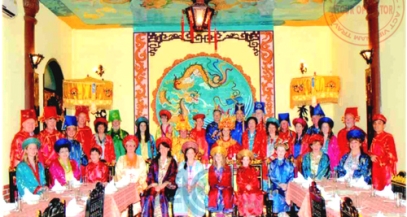
Mr. Navy Vang
Australia | 10/13/2014
Mandarin Group from Australia (Charming Vietnam 10 Days)
Mr. Navy Vang - Tour manager from Australia said: " Wow what a great vacation !. Thank you Mr Kelvin Pham so much. We are very grateful for everything you did for us and everything went very well. We’re safe and sound back home thinking about the joy we experienced. I've already decided that when I choose to travel again, I will go through your company. I also highly recommend ACT Travel Travel to any organization looking for a great agency. Kind regards
Mr. Ricardo - Program Manager
Brazil | 03/31/2014
DOMINGOS Group from Brazin (IMPRESSIVE VIETNAM 17 DAYS.)
Mr. Ricardo - Program Manager said “Dear Kelvin, Thanks you very much for your well arrangement. Thank you for the updated weather information. I have traveled a lot as a geography professor and dealt with many tour operators. You are one of the best tour operators who can take so much concern and care about customers. I must congratulate you on your good organization and care to minute points. Thanks for the mobile phone you provided to us and SIM cards you provide to all of us (29 cards, I know they are not cheap), it was an excellent convenience for us. It was a brilliant idea and we really appreciated knowing there was someone we could contact at any time should we need to. We love your welcome dinner at Binh Quoi village, where we enjoyed rich traditional southern Vietnamese cuisine with musical accompaniment provided by local folk musicians. We were very interested in the traditional Vietnamese wedding in Binh Quoi and we never forget the “Gong show” in Buon Me Thuot. Once again, thank you very much for great job”.
Ms. Barbara Betts
Australia | 10/13/2014
Orbiz Group from Australia (Discover Vietnam and Cambodia 15 Days)
Ms. Barbara Betts - Escorted guide from Australia said: " Dear Kelvin I want to take this opportunity to thanks you for providing us with superb guides in Vietnam and Cambodia. Well, Manh - tour guide in Vietnam is very professional and knowledegable and you can feel very safe in allowing him to guide your tours. The drivers you provided were also friendly, capable and they too did everything for the group to be happy Thanks you Kelvin so far for a fabulous tour.
Mr. Dany
Malaysia | 10/13/2014
Teachers Group From Malaysia ( Hanoi – Halong bay – Ninh Binh 6 Days )
Mr. Dany - Escorted guide from Malaysia said: " Hi Kelvin Pham, Thanks for arranging a great trip. I wanted to let you know how pleased we were with the itinerary and all the arrangements you organized. Everything worked extremely well and went exactly as planned. The guides were very knowledgable. My favorite site was cruising on the Halong bay. The hotels were great as they were located at the heart of city. We did enjoy eating at the local restaurants as arranged by ACT. The foods were sometimes unusual, but still tasty. I loved “Pho Hanoi“ very much and I would try to cook at my home… Thanks again
Mr. Ohad
Turkey | 10/13/2014
Istmaz Group from Turkey (Saigon - Mekong Delta - Cambodia - Angkor Wat 12 Days).
Mr. Ohad - The Tour Leader said: " On behalf of the entire group, I just wanted to thank both of you for all your help and outstanding execution in making our trip memorable! The entire group could not say enough great things about how well organized & smooth everything went. I really enjoyed Vietnam & Travel. Both tour guides were terrific and Angkor Wat was just amazing! All your arrangements worked out very smoothly and I consider the pilgrimage to be a great success ".
Mr. Steven
United Kingdom | 10/13/2014
Ponila Group from UK (Higlight of Vietnam 16 Days).
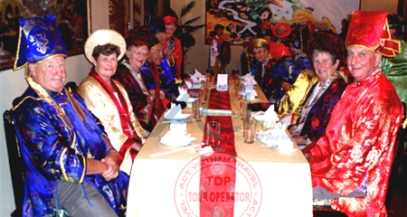
Mr. Steven - Escorted guide from UK said: Our trip to Vietnam was overall a positive one. We were very happy with the level of accommodation and quality of the food at all times. We love Hanoi but Ha Long Bay is certainly one of the most beautiful places we have ever seen; the old city in Hoi An has great potential becoming a world-class tourist attraction; and citadel in Hue embodies a great deal of historic signifance, we have a lot of photos in Hue. Cruising on Mekong Delta river was so interesting and Dalat highland was very romantic. Finally, please give our thanks to the tour guides Mrs Phuong, Mr Ky and the drivers who accompanied us throughout, always accommodating to the group's requests and last minute changes in itinerary. We won't forget you!
Mr. Barrick
United States | 10/13/2014
Global Alliane Group From USA (Discover Vietnam – Cambodia 10 Days)
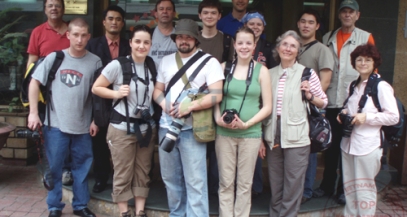
Mr. Barrick - the Tour Leader said: " Dear ACT Team,This is to thank you, and all of those who organised and guided our visit to Vietnam & Cambodia, for a superb holiday. We had a trip of a life time. Everything we were promised happened and more. We brought back so many memories and stories. The restaurants were wonderful and the hotels were great. Mr Nguyen had such a lot of knowledge he shared with us, and had a great sense of humor. He even knew of some Cambodian slang words. The whole trip will be something we will always remember and share with our family and friends. Thanks for all your help in making it so enjoyable. We shall tell all our friends traveling to Indochina that they must use ACT Travel's services !! ".
Partner





ACT VIETNAM TRAVEL
No 3, Alley 25, Dich Vong Hau Str, Cau Giay Dist, Hanoi Capital, Vietnam
sales@vietnamtraveland.com - jimy@vietnamtraveland.com - vip@vietnamtraveland.com
License: 01-639/2015/CDLQGVN-GPLHQT
Company
Term of use
Payment Methods


