

Temple of Literature Hanoi: A 950-Year Journey Through Vietnam’s Heritage
Content []
Temple of Literature Hanoi: A 950-Year Journey Through Vietnam’s Heritage
Temple of Literature Hanoi: A 950-Year Journey Through History and Heritage
A visit to the Temple of Literature in Hanoi is a journey through nearly 1,000 years of Vietnamese history. More than an ancient landmark, this remarkable complex reflects the country's enduring respect for education, knowledge and talented scholars.
The story began in 1070, when King Ly Thanh Tong ordered the construction of the Temple of Literature (Van Mieu) to honor Confucius and other great scholars. Six years later, King Ly Nhan Tong established the Imperial Academy (Quoc Tu Giam) beside it, initially welcoming princes and children of royal families. Together, the two institutions laid the foundation for Vietnam's formal education system.
Over the following centuries, the Imperial Academy expanded its admission to talented students beyond the royal family. One of its most celebrated teachers was Chu Van An, remembered for his integrity and dedication to education. Under the Le Dynasty, Vietnam's examination system flourished. In 1484, King Le Thanh Tong ordered the erection of doctoral steles to honor successful candidates. A total of 82 steles were eventually built between 1484 and 1780, preserving the names and achievements of generations of Vietnamese scholars.
The 19th century brought significant changes when King Gia Long transferred the Imperial Academy to Hue in 1802. However, the Temple of Literature continued as a place of worship, and Khue Van Pavilion was added in 1805, becoming one of Hanoi's most recognizable landmarks. Despite suffering damage during the war, the complex has undergone extensive restoration. In 2011, its 82 doctoral steles were inscribed in UNESCO's Memory of the World Programme for Asia and the Pacific, followed by the recognition of the entire complex as a Special National Relic in 2012.
Today, the Temple of Literature remains a living symbol of Vietnam's respect for knowledge, teachers and academic excellence. Walking through its ancient gates, visitors can discover not only the history of the country's first university but also the cultural values that have been passed down through generations.
Unique Cultural Experiences You Shouldn't Miss at the Temple of Literature
A visit to the Temple of Literature offers more than a glimpse into Vietnam's ancient history. This cultural landmark invites visitors to explore traditional architecture, discover the stories of past scholars and experience the values that have shaped Vietnamese education for centuries. Here are some highlights worth adding to your Hanoi itinerary.
Admire the Timeless Architecture
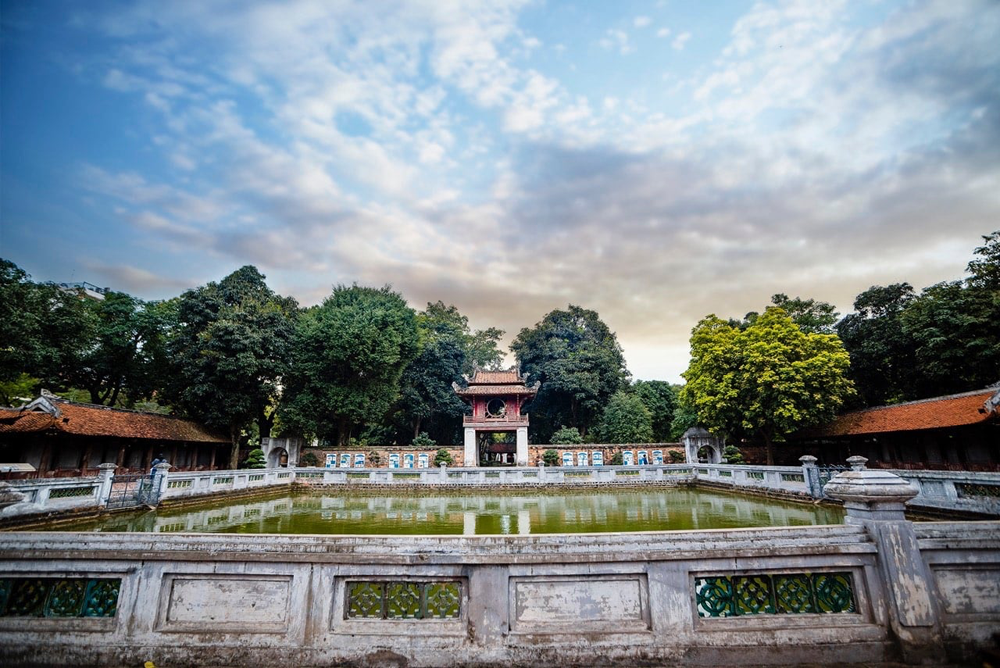
One of the first things you'll notice when visiting the Temple of Literature is its beautiful traditional architecture. The complex follows a symmetrical layout, with five interconnected courtyards featuring ancient gates, tiled roofs, peaceful gardens and historic buildings. Each space has its own story, making the walk through the grounds an enjoyable journey into Vietnam's architectural heritage.
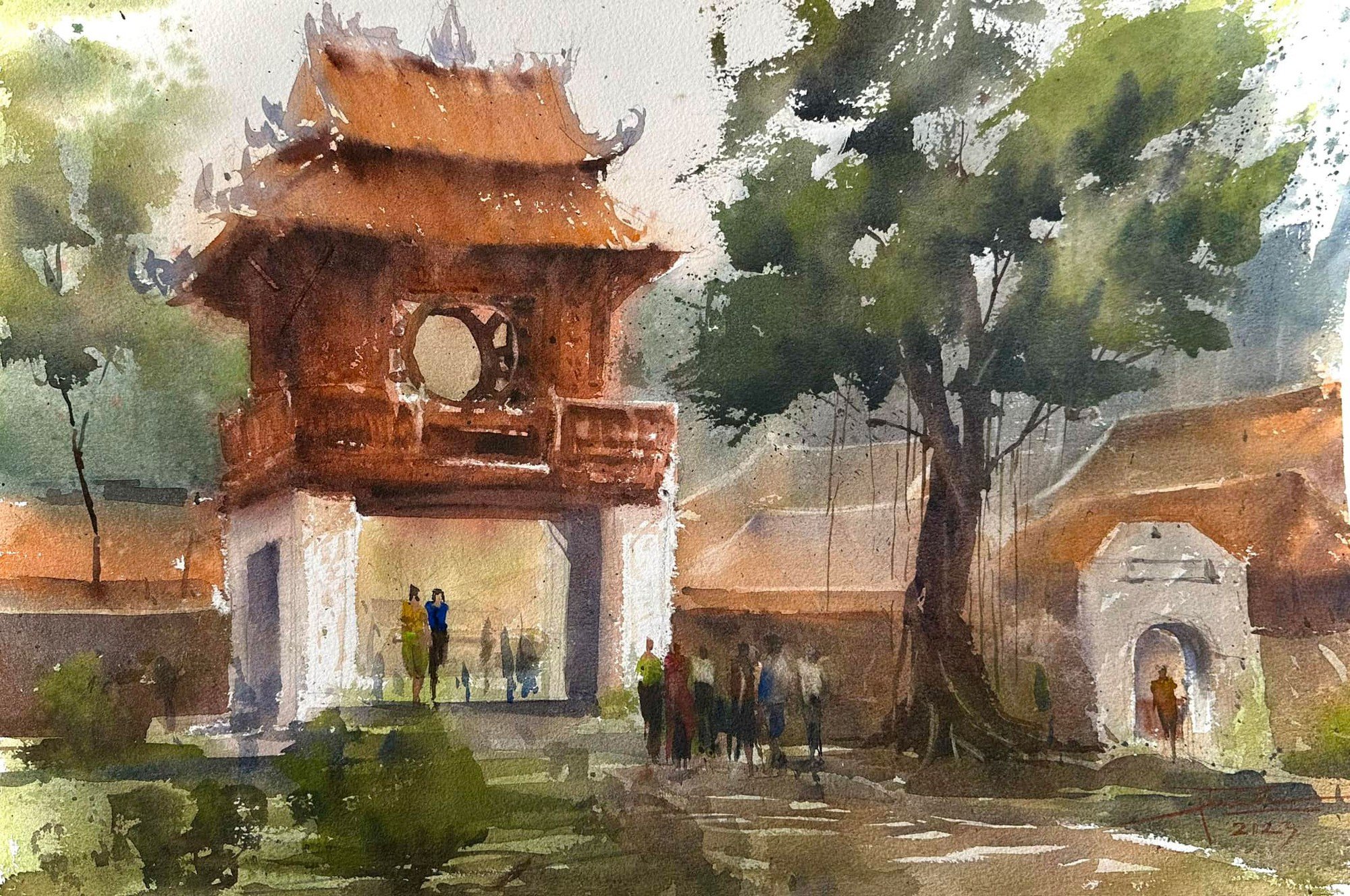
Start at Van Mieu Mon, the main entrance to the complex, before heading towards Khue Van Pavilion. Built in 1805, this elegant structure features a wooden upper floor, distinctive circular windows and an eye-catching red-tiled roof. Today, it serves as one of Hanoi's most recognizable symbols, representing the beauty of literature and knowledge. Further inside, Thien Quang Well reflects the idea of enlightenment, while the stone doctoral steles and Dai Thanh Sanctuary offer a closer look at the country's Confucian heritage.
Discover the 82 Doctoral Steles
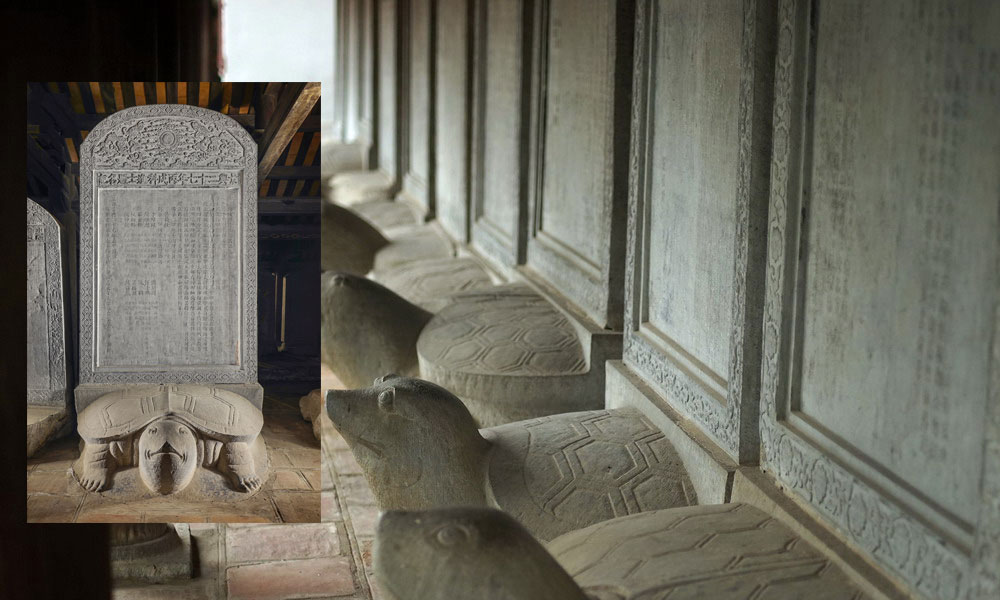
Among the most fascinating features of the complex are the 82 Doctoral Steles, which preserve the names and achievements of Vietnam's greatest scholars. Erected between 1484 and 1780, these stone monuments commemorate successful candidates in royal examinations held from 1442 to 1779. Each stele records valuable details about the scholars, including their names and hometowns, offering a glimpse into the country's historic education system.
Take a closer look at the intricate inscriptions and the stone turtles supporting each monument. In Vietnamese and broader East Asian culture, turtles symbolize longevity and wisdom, making them fitting guardians of these academic achievements. Recognizing their historical significance, UNESCO inscribed the collection in its Memory of the World Programme for Asia and the Pacific in 2011. For visitors, these steles offer a fascinating connection to the generations of scholars who helped shape Vietnam's history.
Experience the Art of Vietnamese Calligraphy
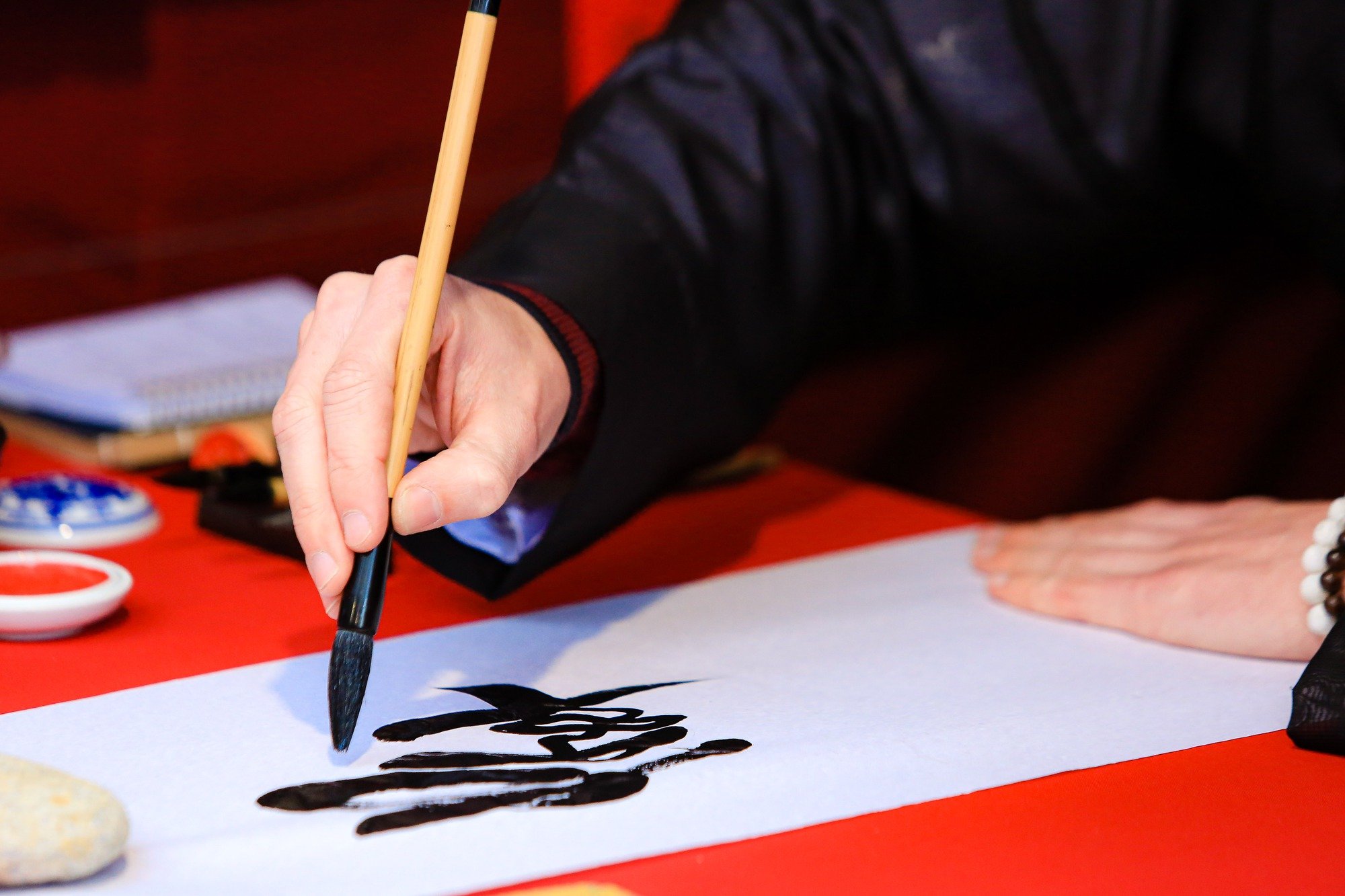
For a more hands-on cultural experience, don't miss the opportunity to discover Vietnamese calligraphy. Watch traditional calligraphers, often dressed in ao dai or traditional robes, carefully move their brushes across red paper or handmade paper to create elegant Chinese and Vietnamese characters. Beyond its artistic beauty, calligraphy reflects the Vietnamese belief that good handwriting should express both knowledge and personal character.
You may also encounter the tradition of xin chu, or requesting calligraphy, especially during Lunar New Year or before important examinations. Visitors can choose meaningful characters such as Tam (kindness and sincerity), Tri (wisdom), Duc (virtue) or Tai (talent). Each carries a personal wish for the future, making a handwritten calligraphy piece a thoughtful souvenir to take home from Hanoi.
Feel the Spirit of Vietnam's Learning Traditions
The Temple of Literature is perhaps the best place to understand why education has long held such an important position in Vietnamese society. In the past, young scholars spent years preparing for demanding imperial examinations, hoping to earn academic titles and serve the country as officials. Their dedication reflects a deeply rooted belief that knowledge is a path to personal achievement and a way to contribute to society.
Another value closely associated with the site is ton su trong dao, the Vietnamese tradition of respecting teachers and honoring their contributions to education. The legacy of Chu Van An, a distinguished educator remembered for his integrity and dedication, remains a powerful example of this belief. Today, the tradition continues as students and families visit the Temple of Literature before important examinations to pray for good luck and academic success. Ceremonies honoring outstanding students also take place here, connecting the educational traditions of the past with the aspirations of younger generations.
With its centuries-old architecture, fascinating history and living educational traditions, the Temple of Literature is more than just another historical attraction in Hanoi. It offers a meaningful opportunity to discover the cultural values that have shaped Vietnam across generations. If you're planning a trip to the capital, make sure to add this remarkable landmark to your itinerary. And with ACT Travel Agent, you can explore Hanoi's cultural treasures through a tailor-made journey designed around your interests.
Read this next


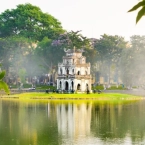
Dong Van Stone Plateau recognised as world geopark


Quick Contact
Reviews from Customers
Please take a look at the following reviews from our customers

Mr Clarence- Travel President, Philippines
Vietnam | 01/14/2026
Luxury Golf Tour in Da Nang, 5days
Hi Jimy, We returned home safely today. I would like to say a special thanks to you and your team ACT TRAVEL. We really loved and satisfied with your pro services. We do love these golf courses in Da Nang. They were amazing and fantastic quality and view. We will come back here soon. I am looking foward to working together with you soon! Best regards, Mr Clarence- Travel President, Philippines
Mr. Jean Pie
United Kingdom | 10/13/2014
RAM Holidays from UK (Impressive of Vietnam 15 days)
Mr. Jean Pie – Tour Leader said “Thank you very much for doing such an excellent job on the tour. You went above and beyond for all of us and we really appreciate all your hard work. Thank you for your calm leadership through the “HAIYAN” storm, you really help us through it. Thanks to ACT Travel, we had a wonderful time and unforgettable memory”.
Mr. Navy Vang
Australia | 10/13/2014
Mandarin Group from Australia (Charming Vietnam 10 Days)
Mr. Navy Vang - Tour manager from Australia said: " Wow what a great vacation !. Thank you Mr Kelvin Pham so much. We are very grateful for everything you did for us and everything went very well. We’re safe and sound back home thinking about the joy we experienced. I've already decided that when I choose to travel again, I will go through your company. I also highly recommend ACT Travel Travel to any organization looking for a great agency. Kind regards
Mr. Ricardo - Program Manager
Brazil | 03/31/2014
DOMINGOS Group from Brazin (IMPRESSIVE VIETNAM 17 DAYS.)
Mr. Ricardo - Program Manager said “Dear Kelvin, Thanks you very much for your well arrangement. Thank you for the updated weather information. I have traveled a lot as a geography professor and dealt with many tour operators. You are one of the best tour operators who can take so much concern and care about customers. I must congratulate you on your good organization and care to minute points. Thanks for the mobile phone you provided to us and SIM cards you provide to all of us (29 cards, I know they are not cheap), it was an excellent convenience for us. It was a brilliant idea and we really appreciated knowing there was someone we could contact at any time should we need to. We love your welcome dinner at Binh Quoi village, where we enjoyed rich traditional southern Vietnamese cuisine with musical accompaniment provided by local folk musicians. We were very interested in the traditional Vietnamese wedding in Binh Quoi and we never forget the “Gong show” in Buon Me Thuot. Once again, thank you very much for great job”.
Ms. Barbara Betts
Australia | 10/13/2014
Orbiz Group from Australia (Discover Vietnam and Cambodia 15 Days)
Ms. Barbara Betts - Escorted guide from Australia said: " Dear Kelvin I want to take this opportunity to thanks you for providing us with superb guides in Vietnam and Cambodia. Well, Manh - tour guide in Vietnam is very professional and knowledegable and you can feel very safe in allowing him to guide your tours. The drivers you provided were also friendly, capable and they too did everything for the group to be happy Thanks you Kelvin so far for a fabulous tour.
Mr. Dany
Malaysia | 10/13/2014
Teachers Group From Malaysia ( Hanoi – Halong bay – Ninh Binh 6 Days )
Mr. Dany - Escorted guide from Malaysia said: " Hi Kelvin Pham, Thanks for arranging a great trip. I wanted to let you know how pleased we were with the itinerary and all the arrangements you organized. Everything worked extremely well and went exactly as planned. The guides were very knowledgable. My favorite site was cruising on the Halong bay. The hotels were great as they were located at the heart of city. We did enjoy eating at the local restaurants as arranged by ACT. The foods were sometimes unusual, but still tasty. I loved “Pho Hanoi“ very much and I would try to cook at my home… Thanks again
Mr. Ohad
Turkey | 10/13/2014
Istmaz Group from Turkey (Saigon - Mekong Delta - Cambodia - Angkor Wat 12 Days).
Mr. Ohad - The Tour Leader said: " On behalf of the entire group, I just wanted to thank both of you for all your help and outstanding execution in making our trip memorable! The entire group could not say enough great things about how well organized & smooth everything went. I really enjoyed Vietnam & Travel. Both tour guides were terrific and Angkor Wat was just amazing! All your arrangements worked out very smoothly and I consider the pilgrimage to be a great success ".
Mr. Steven
United Kingdom | 10/13/2014
Ponila Group from UK (Higlight of Vietnam 16 Days).
Mr. Steven - Escorted guide from UK said: Our trip to Vietnam was overall a positive one. We were very happy with the level of accommodation and quality of the food at all times. We love Hanoi but Ha Long Bay is certainly one of the most beautiful places we have ever seen; the old city in Hoi An has great potential becoming a world-class tourist attraction; and citadel in Hue embodies a great deal of historic signifance, we have a lot of photos in Hue. Cruising on Mekong Delta river was so interesting and Dalat highland was very romantic. Finally, please give our thanks to the tour guides Mrs Phuong, Mr Ky and the drivers who accompanied us throughout, always accommodating to the group's requests and last minute changes in itinerary. We won't forget you!
Mr. Barrick
United States | 10/13/2014
Global Alliane Group From USA (Discover Vietnam – Cambodia 10 Days)
Mr. Barrick - the Tour Leader said: " Dear ACT Team,This is to thank you, and all of those who organised and guided our visit to Vietnam & Cambodia, for a superb holiday. We had a trip of a life time. Everything we were promised happened and more. We brought back so many memories and stories. The restaurants were wonderful and the hotels were great. Mr Nguyen had such a lot of knowledge he shared with us, and had a great sense of humor. He even knew of some Cambodian slang words. The whole trip will be something we will always remember and share with our family and friends. Thanks for all your help in making it so enjoyable. We shall tell all our friends traveling to Indochina that they must use ACT Travel's services !! ".
Partner





ACT VIETNAM TRAVEL
No 3, Alley 25, Dich Vong Hau Str, Cau Giay Dist, Hanoi Capital, Vietnam
sales@vietnamtraveland.com - jimy@vietnamtraveland.com - vip@vietnamtraveland.com
License: 01-639/2015/CDLQGVN-GPLHQT
Company
Term of use
Payment Methods


