

11 Most Beautiful Places in Vietnam, According to The Times (P1: Northern Vietnam)
Content []
11 Most Beautiful Places in Vietnam, According to The Times (P1: Northern Vietnam)
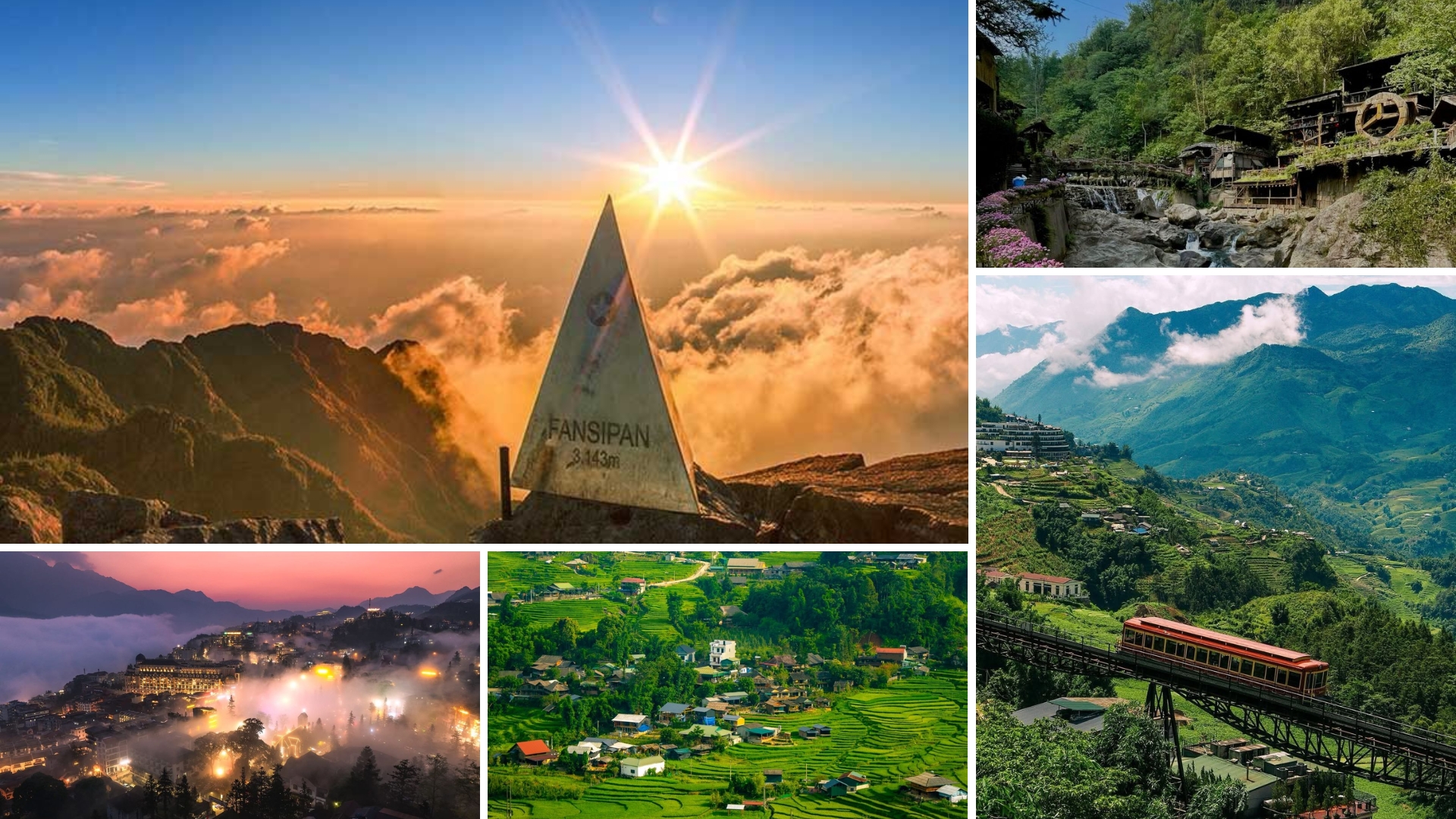
Sa Pa – Mountains and Rice Terraces
High in the mountains of Northern Vietnam, Sa Pa unfolds in layers of misty peaks, deep valleys and rice terraces that seem to flow endlessly down the hillsides. Carved into the mountains over hundreds of years by ethnic communities including the H’Mong, Dao, Tay and Giay, these terraces are not only beautiful to look at. They tell a story of generations learning to live with the steep terrain and shaping it gently into one of Vietnam’s most extraordinary landscapes.
And Sa Pa never looks quite the same twice. In April and May, water-filled terraces shimmer like mirrors beneath the sky. By summer, the mountains are wrapped in brilliant green, while September and October bring perhaps the most magical transformation, when ripening rice turns entire valleys into sweeping layers of gold. On cooler mornings, clouds drift between the peaks and mist settles over the fields, sometimes leaving villages almost hidden beneath a soft white veil.
Follow the trails through Muong Hoa Valley and the scenery becomes quieter and more intimate. Villages such as Y Linh Ho, Lao Chai and Ta Van appear between rice fields and winding streams, with mountains rising in every direction. It is this beautiful rhythm of mountains, seasons and village life that makes Sa Pa feel less like a landscape to simply admire and more like a place you want to step into, wander through and experience for yourself.
Hoang Su Phi – Terraces Away From the Crowds
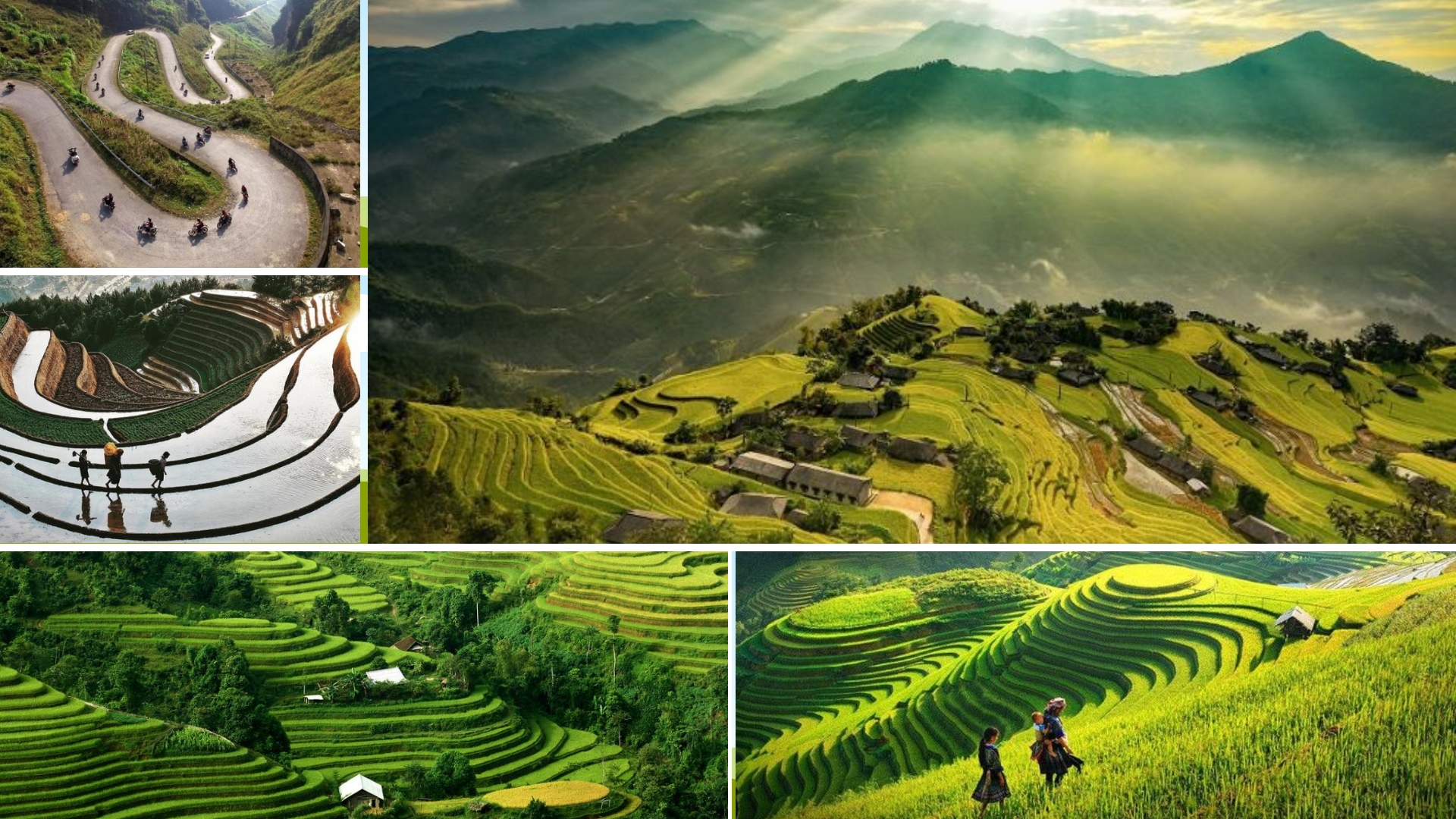
Tucked deep into the mountains of Ha Giang, Hoang Su Phi feels wonderfully removed from the busier rhythm of Vietnam’s better-known mountain destinations. Here, rice terraces curve around steep mountainsides and spill into deep valleys, shaped over generations into an extraordinary landscape that seems to follow every natural contour of the land.
The scenery changes beautifully with the seasons. During the green season, young rice covers the hills in fresh shades of green, while September and October transform the terraces into glowing ribbons of gold winding across the mountains. When winter arrives, mist and low clouds drift through the valleys, softening the landscape and giving the villages an almost hidden, dreamlike quality.
But the beauty of Hoang Su Phi goes far beyond its rice fields. Trekking between remote villages takes you past bamboo forests, streams and ancient Shan Tuyet tea trees, while offering glimpses into the everyday life of Dao, Tay, Nung, La Chi and Co Lao communities. With fewer crowds and a slower pace, Hoang Su Phi is a place to walk, breathe and simply take in the mountains, making its quietness just as memorable as the scenery itself.
Cao Bang – Waterfalls and Limestone Landscapes
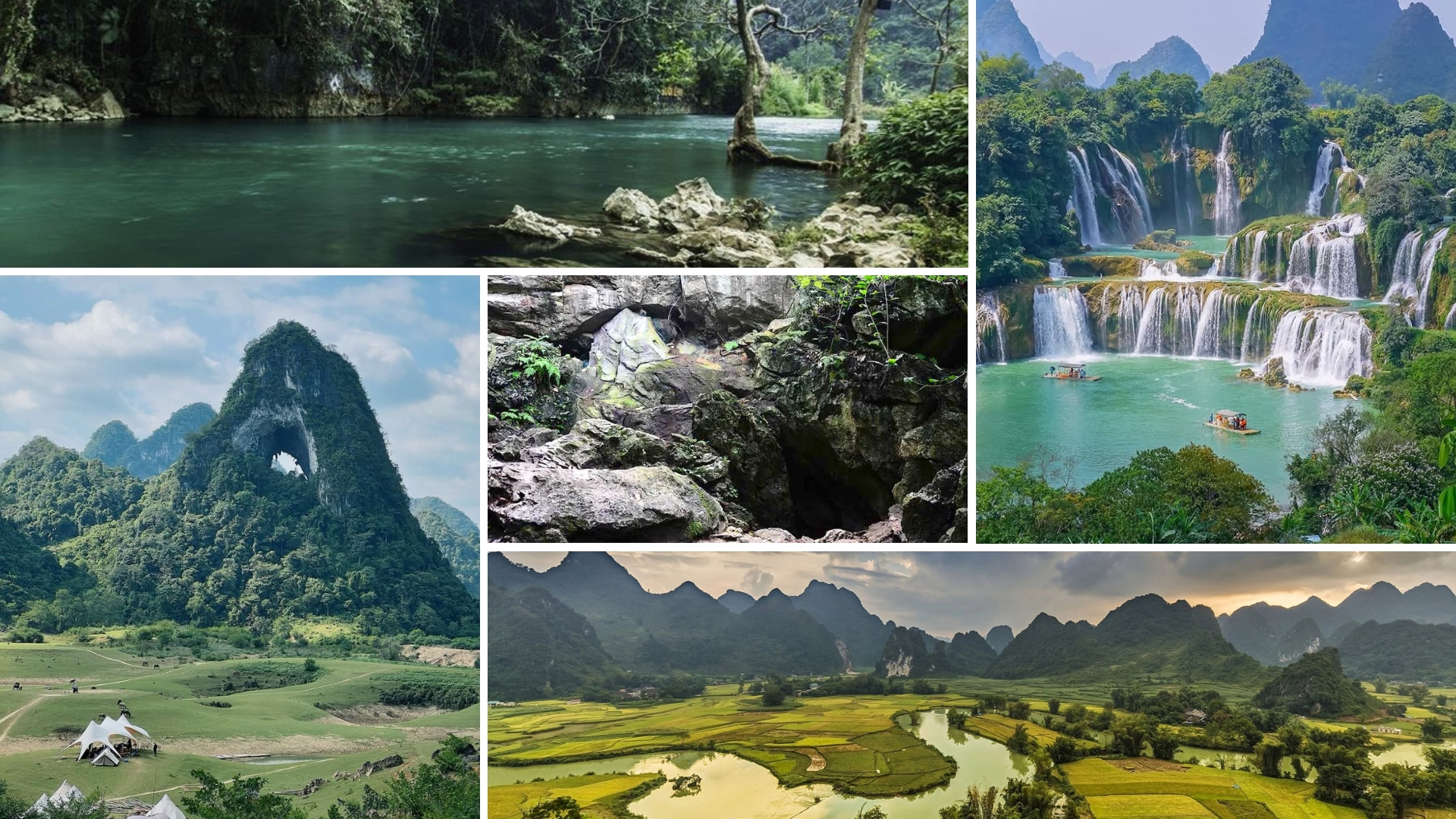
In the far northeast of Vietnam, Cao Bang is a land of towering limestone mountains, emerald rivers and valleys that still feel wonderfully untouched. Much of the province lies within the UNESCO-recognized Non Nuoc Cao Bang Geopark, where dramatic karst formations rise above quiet villages, caves and winding waterways, creating scenery that feels both wild and surprisingly peaceful.
The landscape reaches its most spectacular at Ban Gioc Waterfall, where wide curtains of white water tumble down multiple limestone tiers between Vietnam and China. Surrounded by green mountains and rice fields, the waterfall feels almost perfectly placed within the valley, especially when sunlight catches the mist rising above the water. Elsewhere, Cao Bang reveals a gentler beauty at Pac Bo, where the crystal-clear Lenin Stream winds beneath forested mountains beside a historic site closely associated with President Ho Chi Minh.
Yet Cao Bang is not only shaped by nature and history. Generations of Tay, Nung, Dao and H’Mong communities have given the region a rich cultural identity, preserved through traditional villages, crafts, Then singing and distinctive local dishes. Together, these layers of limestone peaks, rushing waterfalls, turquoise water and mountain culture make Cao Bang one of those rare places where every road seems to lead deeper into another beautiful landscape.
Hanoi Old Quarter – The Heart of the Capital
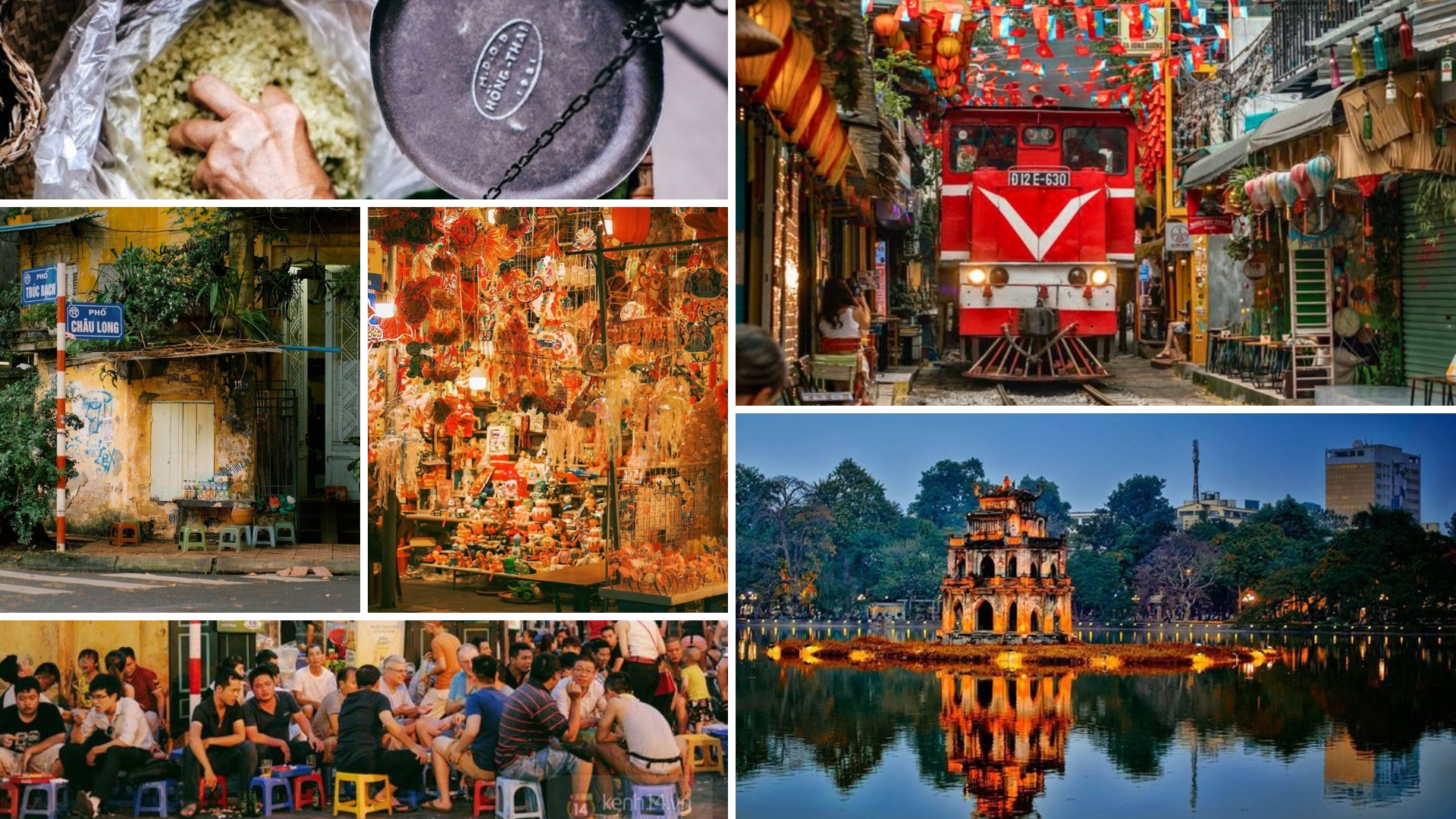
The beauty of the Hanoi Old Quarter is not found in one grand monument or perfect postcard view. It lives in the beautiful chaos of everyday life: narrow streets lined with weathered shophouses, scooters weaving past flower vendors, the aroma of street food drifting from tiny kitchens and traces of old Hanoi appearing around almost every corner.
The neighborhood grew from the famous 36 guild streets, where each street was traditionally associated with a particular craft or trade. Some of that character still survives today. Hang Bac carries a centuries-old tradition of silverwork, Hang Ma bursts with colorful decorations during festivals, while Lan Ong is instantly recognizable by the earthy fragrance of traditional herbs. Between them, long and narrow tube houses, faded façades and moss-covered tiled roofs create a streetscape where different chapters of Hanoi seem to overlap.
To truly understand the Old Quarter, however, you have to experience its rhythm. Early mornings around Hoan Kiem Lake begin gently with walkers and elderly locals practicing tai chi. Soon, the streets fill with motorbikes, baskets of fruit and flowers, steaming bowls of pho and the smoky aroma of bun cha. By afternoon, small plastic stools spill onto the sidewalks as people linger over strong Vietnamese coffee or creamy egg coffee, watching the city rush past.
Then night falls and the neighborhood changes again. Walking streets fill with people, food stalls glow beneath streetlights and Ta Hien becomes one of the liveliest corners of the capital. From a quiet morning beside the lake to a late-night beer on a crowded sidewalk, the Hanoi Old Quarter is beautiful precisely because it is never still. It is old, noisy, flavorful and wonderfully alive.
Read this next


Dong Van Stone Plateau recognised as world geopark
Quick Contact
Reviews from Customers
Please take a look at the following reviews from our customers
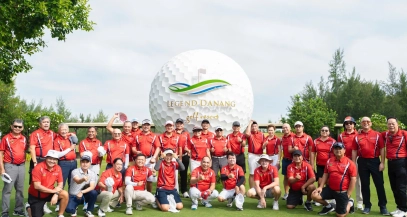
Mr Clarence- Travel President, Philippines
Vietnam | 01/14/2026
Luxury Golf Tour in Da Nang, 5days
Hi Jimy, We returned home safely today. I would like to say a special thanks to you and your team ACT TRAVEL. We really loved and satisfied with your pro services. We do love these golf courses in Da Nang. They were amazing and fantastic quality and view. We will come back here soon. I am looking foward to working together with you soon! Best regards, Mr Clarence- Travel President, Philippines
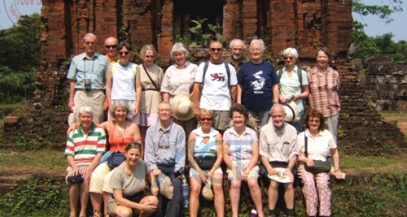
Mr. Jean Pie
United Kingdom | 10/13/2014
RAM Holidays from UK (Impressive of Vietnam 15 days)
Mr. Jean Pie – Tour Leader said “Thank you very much for doing such an excellent job on the tour. You went above and beyond for all of us and we really appreciate all your hard work. Thank you for your calm leadership through the “HAIYAN” storm, you really help us through it. Thanks to ACT Travel, we had a wonderful time and unforgettable memory”.
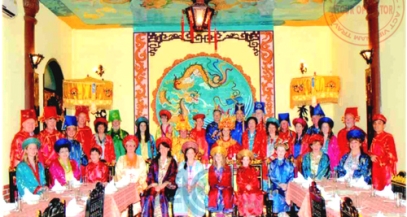
Mr. Navy Vang
Australia | 10/13/2014
Mandarin Group from Australia (Charming Vietnam 10 Days)
Mr. Navy Vang - Tour manager from Australia said: " Wow what a great vacation !. Thank you Mr Kelvin Pham so much. We are very grateful for everything you did for us and everything went very well. We’re safe and sound back home thinking about the joy we experienced. I've already decided that when I choose to travel again, I will go through your company. I also highly recommend ACT Travel Travel to any organization looking for a great agency. Kind regards
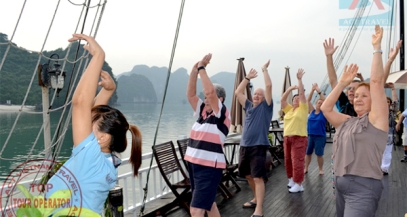
Mr. Ricardo - Program Manager
Brazil | 03/31/2014
DOMINGOS Group from Brazin (IMPRESSIVE VIETNAM 17 DAYS.)
Mr. Ricardo - Program Manager said “Dear Kelvin, Thanks you very much for your well arrangement. Thank you for the updated weather information. I have traveled a lot as a geography professor and dealt with many tour operators. You are one of the best tour operators who can take so much concern and care about customers. I must congratulate you on your good organization and care to minute points. Thanks for the mobile phone you provided to us and SIM cards you provide to all of us (29 cards, I know they are not cheap), it was an excellent convenience for us. It was a brilliant idea and we really appreciated knowing there was someone we could contact at any time should we need to. We love your welcome dinner at Binh Quoi village, where we enjoyed rich traditional southern Vietnamese cuisine with musical accompaniment provided by local folk musicians. We were very interested in the traditional Vietnamese wedding in Binh Quoi and we never forget the “Gong show” in Buon Me Thuot. Once again, thank you very much for great job”.
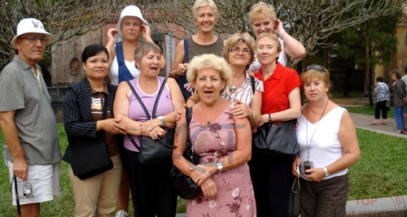
Ms. Barbara Betts
Australia | 10/13/2014
Orbiz Group from Australia (Discover Vietnam and Cambodia 15 Days)
Ms. Barbara Betts - Escorted guide from Australia said: " Dear Kelvin I want to take this opportunity to thanks you for providing us with superb guides in Vietnam and Cambodia. Well, Manh - tour guide in Vietnam is very professional and knowledegable and you can feel very safe in allowing him to guide your tours. The drivers you provided were also friendly, capable and they too did everything for the group to be happy Thanks you Kelvin so far for a fabulous tour.
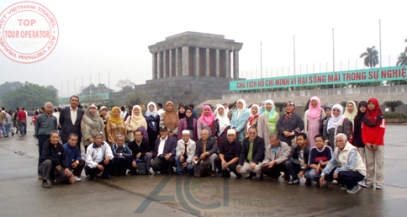
Mr. Dany
Malaysia | 10/13/2014
Teachers Group From Malaysia ( Hanoi – Halong bay – Ninh Binh 6 Days )
Mr. Dany - Escorted guide from Malaysia said: " Hi Kelvin Pham, Thanks for arranging a great trip. I wanted to let you know how pleased we were with the itinerary and all the arrangements you organized. Everything worked extremely well and went exactly as planned. The guides were very knowledgable. My favorite site was cruising on the Halong bay. The hotels were great as they were located at the heart of city. We did enjoy eating at the local restaurants as arranged by ACT. The foods were sometimes unusual, but still tasty. I loved “Pho Hanoi“ very much and I would try to cook at my home… Thanks again
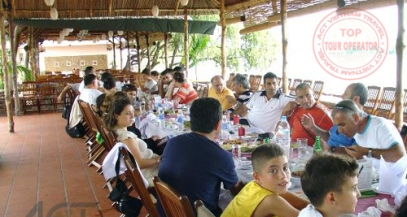
Mr. Ohad
Turkey | 10/13/2014
Istmaz Group from Turkey (Saigon - Mekong Delta - Cambodia - Angkor Wat 12 Days).
Mr. Ohad - The Tour Leader said: " On behalf of the entire group, I just wanted to thank both of you for all your help and outstanding execution in making our trip memorable! The entire group could not say enough great things about how well organized & smooth everything went. I really enjoyed Vietnam & Travel. Both tour guides were terrific and Angkor Wat was just amazing! All your arrangements worked out very smoothly and I consider the pilgrimage to be a great success ".
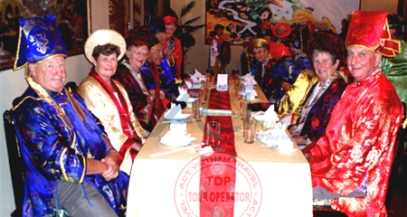
Mr. Steven
United Kingdom | 10/13/2014
Ponila Group from UK (Higlight of Vietnam 16 Days).
Mr. Steven - Escorted guide from UK said: Our trip to Vietnam was overall a positive one. We were very happy with the level of accommodation and quality of the food at all times. We love Hanoi but Ha Long Bay is certainly one of the most beautiful places we have ever seen; the old city in Hoi An has great potential becoming a world-class tourist attraction; and citadel in Hue embodies a great deal of historic signifance, we have a lot of photos in Hue. Cruising on Mekong Delta river was so interesting and Dalat highland was very romantic. Finally, please give our thanks to the tour guides Mrs Phuong, Mr Ky and the drivers who accompanied us throughout, always accommodating to the group's requests and last minute changes in itinerary. We won't forget you!
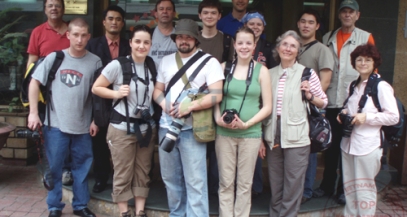
Mr. Barrick
United States | 10/13/2014
Global Alliane Group From USA (Discover Vietnam – Cambodia 10 Days)
Mr. Barrick - the Tour Leader said: " Dear ACT Team,This is to thank you, and all of those who organised and guided our visit to Vietnam & Cambodia, for a superb holiday. We had a trip of a life time. Everything we were promised happened and more. We brought back so many memories and stories. The restaurants were wonderful and the hotels were great. Mr Nguyen had such a lot of knowledge he shared with us, and had a great sense of humor. He even knew of some Cambodian slang words. The whole trip will be something we will always remember and share with our family and friends. Thanks for all your help in making it so enjoyable. We shall tell all our friends traveling to Indochina that they must use ACT Travel's services !! ".
Partner





ACT VIETNAM TRAVEL
No 3, Alley 25, Dich Vong Hau Str, Cau Giay Dist, Hanoi Capital, Vietnam
sales@vietnamtraveland.com - jimy@vietnamtraveland.com - vip@vietnamtraveland.com
License: 01-639/2015/CDLQGVN-GPLHQT
Company
Term of use
Payment Methods


